
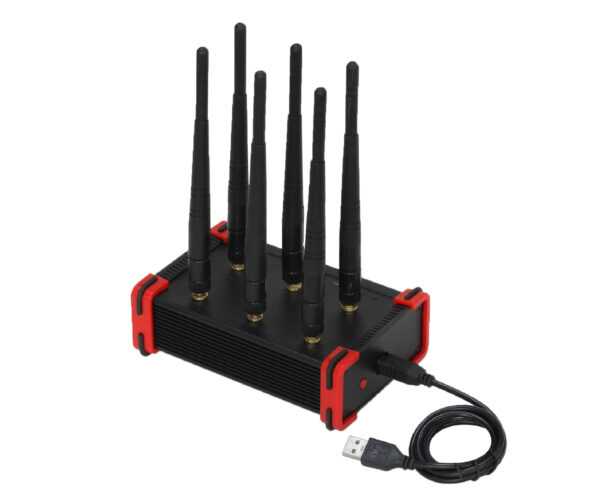
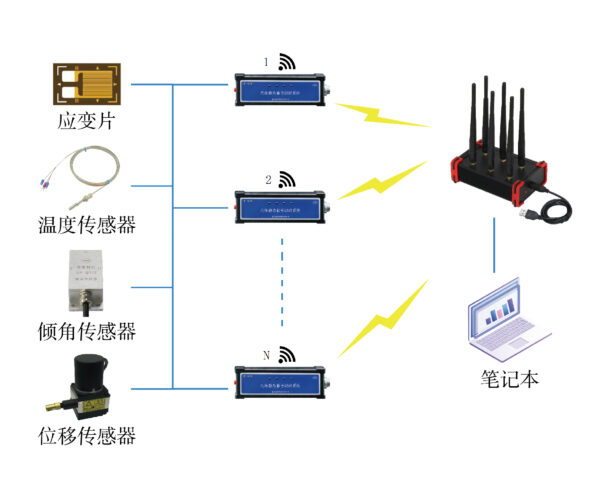
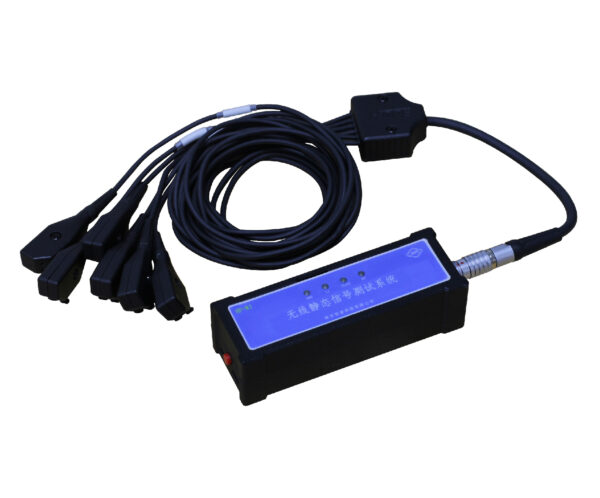
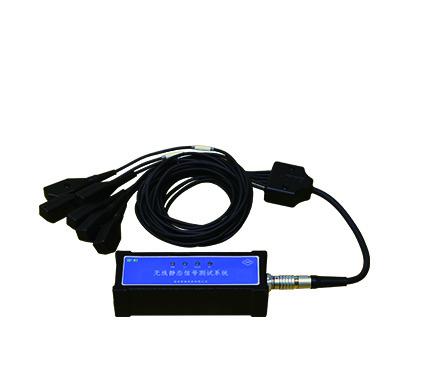
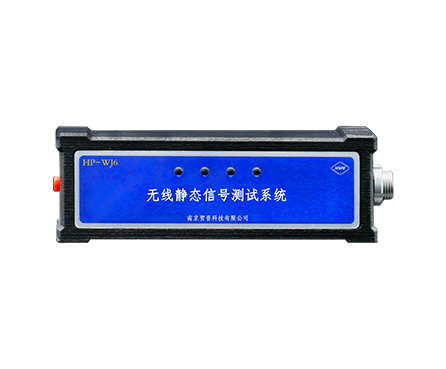
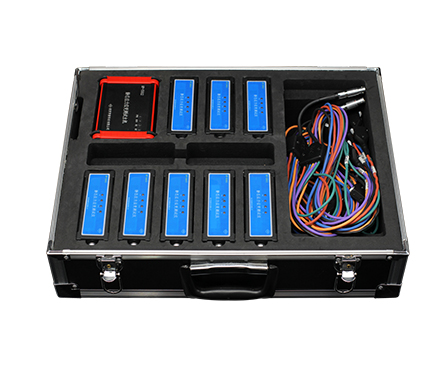
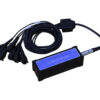
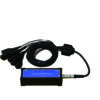
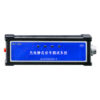
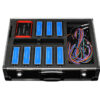
HP-WJ6 is a wireless static strain (stress/strain) testing system designed for distributed, multi-point strain monitoring with simple field deployment. It uses a Zigbee self-network, 24-bit ADC, and 10 Hz synchronous acquisition, plus solderless quick-connect terminals to reduce installation time and wiring complexity.
| Solderless quick-connect terminal | Avoids sensor lead soldering and reduces failure points in multi-channel strain projects. |
|---|---|
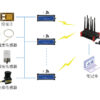
| Distributed Zigbee self-network | Supports multi-terminal deployment with up to 256 channels, minimizing on-site wiring workload. |
| High accuracy + stability for static strain | 24-bit ADC, typical accuracy 0.2% ± 2 digits, and strong short-term stability. |
| Flexible sampling for monitoring | From 10 Hz (capture slow changes / events) down to 1 sample/day (long-term trend monitoring). |
| Field-ready power | Built-in lithium battery for ~16 hours; optional solar charging for extended outdoor monitoring. |
Model: HP-WJ6 (10Hz)
System type: Wireless static strain / stress–strain test & monitoring
Networking: Zigbee self-network, distributed multi-terminal networking
Max link distance: Up to 200 m (typical self-network distance)
Scalability: Up to 256 channels (distributed expansion)
Sampling: 10 Hz synchronous (all channels); configurable down to 1 sample/day per channel
Data storage: Built-in 32 GB TF card
Power: Built-in rechargeable lithium battery, ~16 hours standalone operation; optional solar charging module
User-friendly wiring: Solderless quick-plug terminal (patent: ZL 2021 3 0748190.6)
HP-WJ6 is built for long-duration, stable strain measurement in real-world environments (outdoor structures, field tests, multi-station deployments). With a low-power design, wireless networking, and local storage, it supports continuous monitoring workflows where wiring, power access, and installation efficiency are key constraints.
Structural health monitoring (SHM): bridges, buildings, towers, platforms
Construction / reinforcement verification: load testing, settlement/deflection correlation (with appropriate sensors)
Industrial assets: pipelines, frames, supports, pressure vessels (strain-based safety checks)
Outdoor multi-point strain tests: where cabling is difficult or expensive
Long-term strain trend logging: creep, thermal strain, slow deformation monitoring
Strain gauges (primary)
Bridge options: Half-bridge or Quarter-bridge (choose one)
Supported gauge resistance:
60–1000 Ω (full/half bridge)
120 Ω, 350 Ω (quarter bridge)
Gauge factor (K): adjustable 0.01–9.99 (linear adjustable)
Voltage input (optional)
0–2 V (optional channel type)
Channels: 6 channels per terminal; multi-terminal distributed networking
Sampling rate: 10 Hz to 1 sample/day per channel, software remote configuration
Bridge configuration: Half bridge / Quarter bridge (select one)
Measurement type:
Strain: ±15000 με
Voltage (optional): 0–2 V
Accuracy: 0.2% ± 2 digits
ADC resolution: 24-bit
INL (integral nonlinearity): ±2 ppm
Stability (4 hours): ±1 με/hour; ±1 με/°C
Excitation: DC 2 V
Storage: Built-in 32 GB TF card
Wireless communication: Zigbee self-network, communication distance 200 m
Power: Built-in 3.7 V / 3.5 Ah lithium battery; ~16 h continuous operation; optional solar charging
Operating environment: -20 to +60°C; 10–95% RH
Dimensions: 120 × 45 × 35 mm (L × W × H)
Q1: Is HP-WJ6 mainly for static strain, or can it capture changes in real time?
It’s optimized for static strain monitoring, but it supports 10 Hz acquisition for capturing slow-to-moderate changes and events (e.g., load steps, thermal drift, gradual deformation).
Q2: How many channels can one system expand to?
With distributed multi-terminal networking, it can expand up to 256 channels.
Q3: What is the advantage of the solderless quick-plug terminal?
It speeds up installation, reduces wiring mistakes, and avoids solder-joint failures—especially helpful when many strain gauges are deployed.
Q4: What happens if the wireless link is unstable on site?
HP-WJ6 includes local TF-card storage (32 GB), so data can be saved locally and retrieved later.
Q5: Can it run outdoors for long periods?
Yes. It’s designed for outdoor use with low power consumption, a built-in battery for ~16 hours, and an optional solar charging module for extended deployments.
Q6: Which sensors are supported?
Primary support is for strain gauges (half-bridge / quarter-bridge). A 0–2 V voltage input is available as an optional measurement type.