
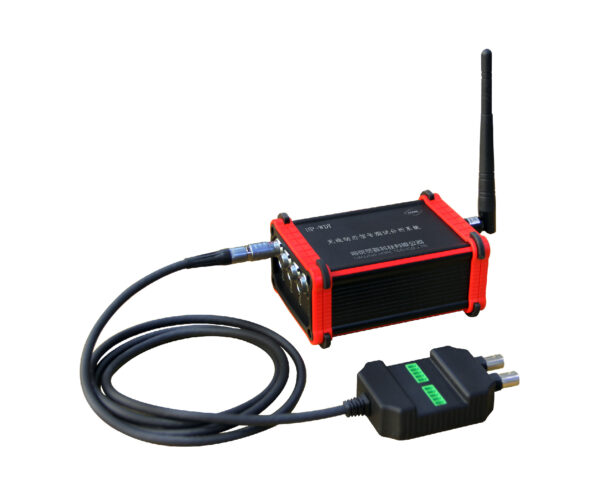
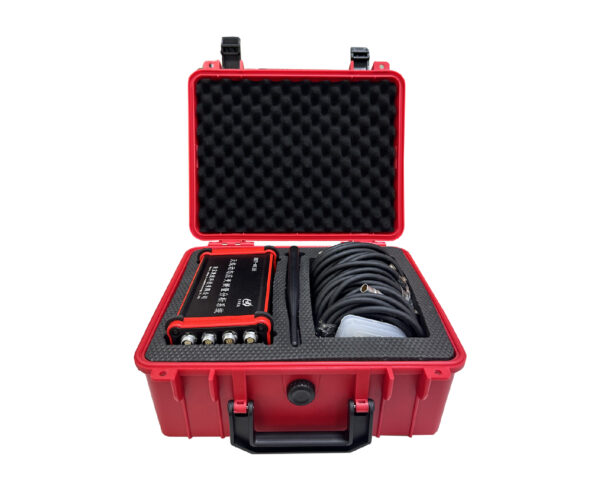
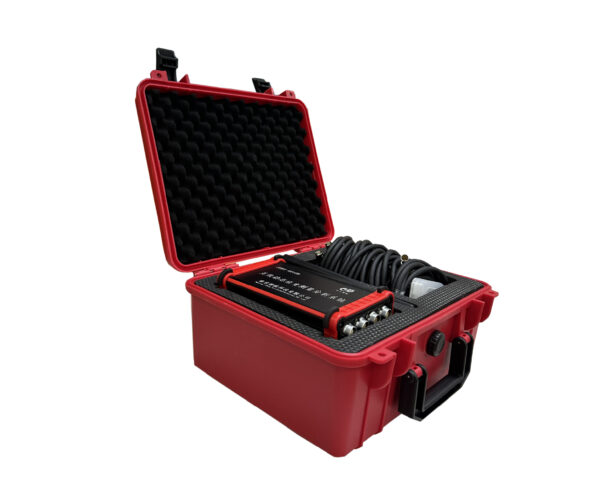
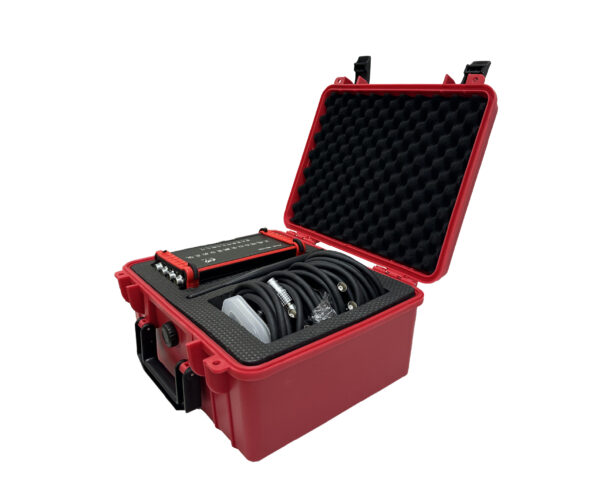
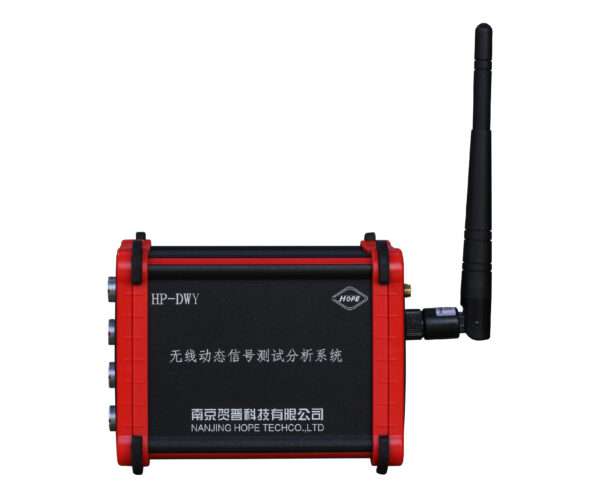
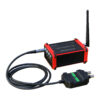
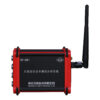
HP-WDY is a high-speed wireless DAQ built for dynamic strain testing and multi-physics measurement in the field. With synchronous parallel acquisition up to 128 kHz per channel, WiFi / optional 4G transmission, and 64 GB local TF-card backup, it’s designed for reliable outdoor and vehicle test programs where fast setup and data continuity matter.
| Mixed-signal, multi-parameter acquisition | Measure strain plus supporting signals (voltage/current/temperature/vibration/speed) in one test plan. |
|---|---|
| True synchronous high-speed sampling | Channels sample, display, and store in parallel—up to 128 kHz per channel. |
| Wireless deployment, faster setup | WiFi / optional 4G helps eliminate long cable runs and supports remote data access. |
| Built-in data backup | Local TF-card storage reduces the risk of missing critical transient events. |
| Field-ready and portable | Battery-powered, modular, and easy to scale for distributed measurement points. |
Model: HP-WDY (128 kHz)
System type: Wireless dynamic strain testing & signal analysis (distributed DAQ)
Mixed input: Strain, voltage, current, force, torque, displacement, temperature, acceleration, speed, etc.
Wireless networking: WiFi self-network (short-range); optional 4G self-network (wide-area)
Data protection: Simultaneous acquisition + local 64 GB TF-card storage for traceability
Power: Built-in rechargeable battery for ~5 hours independent operation
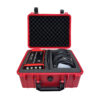
Design: Modular + lightweight; suitable for outdoor, vehicle, and mobile test environments
HP-WDY combines stable per-channel amplification/conditioning with a high-performance 24-bit ADC to deliver synchronized capture across all channels. Its wireless architecture reduces site cabling, while onboard storage supports continuous logging and post-test data retrieval—even when network conditions are imperfect.
Vehicle road testing: dynamic strain, vibration, speed correlation, chassis/suspension evaluation
Outdoor structural testing: temporary strain/vibration measurement where cabling is difficult
Rotating machinery / powertrain tests: torque/load-related strain capture (with suitable sensors)
Distributed test networks: multi-station synchronized acquisition across a large test area
R&D and validation: dynamic response measurement for prototypes and system verification
Strain / bridge-based sensors
Strain gauges and bridge transducers (e.g., load/force/torque/displacement types via bridge output)
Voltage & current
Low-level voltage signals (mV) up to ±10 V
Current loop transmitters (0–20 mA, 4–20 mA)
Temperature
RTD, thermocouple, thermistor (and similar)
Vibration / motion
Acceleration and speed sensors (magnetic, capacitive, IEPE-type)
Channels per station: 4 / 6 / 8 channels; supports multi-station distributed networking
Sampling rate: 1 Hz to 128 kHz per channel; remote software configuration; multi-terminal GPS time synchronization
Measurement ranges:
Strain: ±3000 to ±100000 με
Voltage: ±5 mV to ±10 V
Current: 0–20 mA, 4–20 mA
Bridge modes: Full bridge, half bridge, quarter bridge (2-wire / 3-wire), quarter “virtual bridge” and similar modes
Excitation: DC 3.052 V
Accuracy: 0.2% ± 2 digits
ADC: 24-bit; signal bandwidth DC to 50 kHz
Communication:
WiFi self-network, distance < 200 m
Optional 4G self-network, distance not limited (depends on cellular coverage)
Storage: Built-in 64 GB TF card
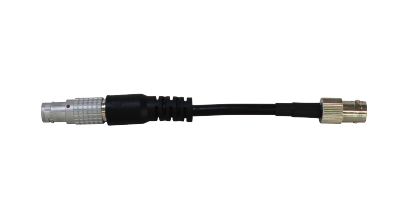
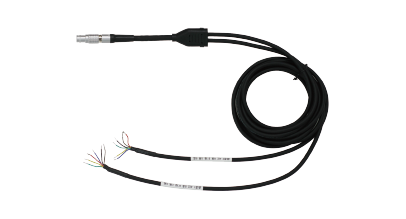
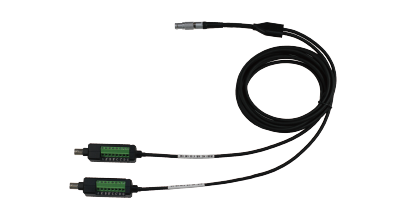
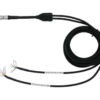
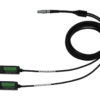
Accessories (shown): signal cable (standard), strain 1-to-2 signal cable box (optional), voltage signal cable (optional)
Q1: What is HP-WDY best used for?
Dynamic strain testing and high-speed multi-channel measurement where synchronized acquisition and fast deployment are needed.
Q2: Can it measure more than strain?
Yes. It supports mixed inputs such as voltage, current, temperature, acceleration, and speed (depending on sensor type and configuration).
Q3: How is data protected if wireless transmission is unstable?
Data can be stored locally on the built-in 64 GB TF card while transmitting, reducing the chance of data loss.
Q4: How far can the wireless system work?
WiFi self-network is typically <200 m. With optional 4G, distance is not limited (subject to network coverage).
Q5: Can multiple stations be synchronized?
Yes. It supports multi-terminal networking with GPS time synchronization for aligned datasets across distributed points.