
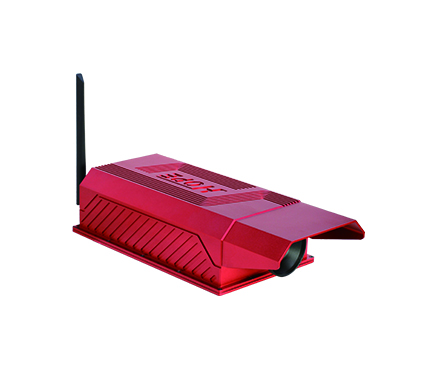
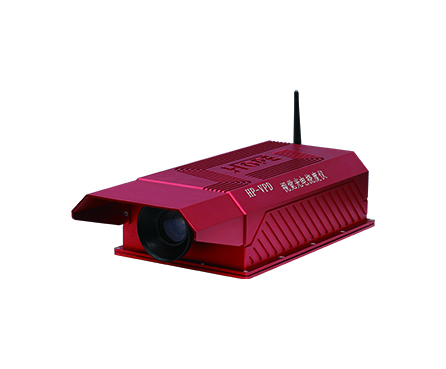
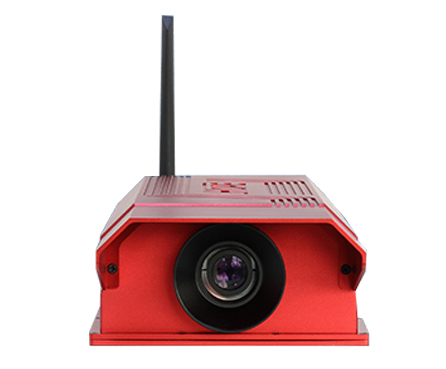
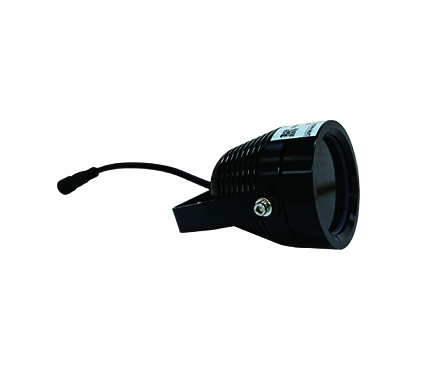
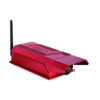
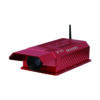
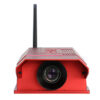
HP-VPD1 is a long-range, vision-based photoelectric deflection and displacement monitoring instrument designed for non-contact, two-dimensional deformation measurement (vertical deflection + lateral movement). It supports multi-target scanning, threshold-triggered photo capture, and continuous online monitoring—with optional battery + 100W solar power for remote, unattended sites.
| Non-contact 2D monitoring | Measures vertical deflection and lateral displacement simultaneously without physical contact. |
|---|---|
| Long-range measurement | Supports 5–500 m measurement distance (lens-dependent) with customizable distance options. |
| Multi-target / multi-point capability | Tracks multiple non-light-source targets and supports up to 100 measurement points (rate depends on point count). |
| Threshold-triggered photo evidence | Set alarm thresholds to trigger linked camera photo capture automatically. |
| Outdoor-ready protection | IP-rated protection for harsh environments (dust/rain/splash). |
| Remote, uninterrupted power | Optional battery + 100W solar panel for continuous online monitoring in remote locations. |
| Flexible data integration | Supports TCP/UDP/MQTT/Modbus and private protocol customization for SCADA/cloud platforms. |
Product Type: Vision photoelectric deflection / displacement monitoring instrument
Measurement Method: High-resolution imaging + pixel-based measurement (non-contact)
Core Capability: 2D displacement (vertical deflection & lateral shift) measured simultaneously
Best Fit For: Bridge/building monitoring, large structures, long-distance displacement tracking, remote sites needing solar power and IP-rated protection
Data & Connectivity: Gigabit Ethernet / 4G / Wi-Fi, multi-protocol output (TCP/UDP/MQTT/Modbus)
HP-VPD1 uses a high-resolution image sensor and vision measurement algorithms to track target movement at long distance—without touching the structure. With multi-point sampling (up to 100 points), users can monitor multiple targets within the scene and capture evidence images automatically when displacement exceeds a preset threshold. A low-power design (≤10W) plus optional high-capacity battery and 100W solar panel enables 7-day unattended operation and long-term online monitoring.
Bridge deflection monitoring (static displacement / long-term creep)
Structural health monitoring (SHM) for buildings, towers, stadium roofs
Slope, excavation, retaining wall movement monitoring
Rail, highway, and large civil infrastructure deformation monitoring
Large equipment alignment / long-distance displacement observation
Remote sites requiring solar-powered, unattended monitoring
Primary sensing: Built-in high-resolution vision sensor (camera-based measurement)
Targets supported: Multiple passive targets within the field of view (no self-luminous source required)
Multi-point measurement:
Single point up to ≤100 Hz
Dual point up to ≤50 Hz
30 points up to ≤20 Hz
100 points up to ≤1 Hz
Triggering: External trigger acquisition supported; threshold linkage supports photo capture
Platform integration: Ethernet/4G/Wi-Fi + common industrial protocols for third-party systems/cloud
Measurement distance: 5–500 m (requires different focal-length lenses); other distances customizable
Displacement range: 0.01 mm – 300 m (large deformation)
Displacement accuracy (by distance):
±0.1 mm (≤20 m)
±0.2 mm (≤50 m)
±0.5 mm (≤100 m)
1 mm (≤200 m)
Field of view width (reference): ~14 m @ 20 m; ~35 m @ 50 m; ~75 m @ 100 m; ~140 m @ 200 m
Sampling rate (depends on point count): single ≤100 Hz; dual ≤50 Hz; 30 pts ≤20 Hz; 100 pts ≤1 Hz; customizable
Measurement direction: 2D deformation (vertical deflection + lateral displacement) simultaneously
Linked photo capture: Set threshold to trigger camera photo capture
Communication: Built-in Gigabit Ethernet, 4G, Wi-Fi; supports unattended operation
Work modes: Continuous / timed / external trigger; acquisition duration configurable
Protocols: TCP, UDP, MQTT, Modbus; private protocol customization supported
Storage: Local 32 GB solid-state storage + cloud transfer server + data backup
Power supply: DC 8–36 V; optional 60 Ah lithium battery; unattended continuous work up to 7 days; optional 100W solar panel
Software functions: Real-time image display; horizontal/vertical displacement curves; displacement value display; cloud platform docking; continuous data transmission
Power consumption: ≤10 W
Protection rating: IP67
1) What does HP-VPD1 measure?
It measures 2D displacement of a target: vertical deflection and lateral movement at the same time.
2) Is it contact or non-contact?
It is non-contact (vision-based). No sensor needs to be attached to the structure.
3) What distance can it work at?
Standard configuration supports 5–500 m depending on the lens; other distances can be customized.
4) How accurate is it?
Accuracy depends on distance: up to ±0.1 mm (≤20 m) and 1 mm (≤200 m).
5) How many points can it monitor at once?
It supports multi-point monitoring. Typical rates: 1 point ≤100 Hz, 2 points ≤50 Hz, 30 points ≤20 Hz, 100 points ≤1 Hz.
6) Can it capture photos when displacement exceeds a limit?
Yes. You can set thresholds to trigger linked camera photo capture for evidence and reporting.
7) Can it run in remote outdoor locations?
Yes. It supports DC 8–36 V, optional 60Ah battery, and optional 100W solar panel for continuous online monitoring, plus IP67 protection.
8) How do we connect it to our system or cloud platform?
It supports Gigabit Ethernet / 4G / Wi-Fi and industrial protocols including TCP/UDP/MQTT/Modbus, with private protocol customization.
9) Do we need special targets?
It supports multiple passive targets in the scene (no self-luminous source required). Target type/size should match distance and accuracy requirements.
10) How do we choose lenses for different distances?
Different focal-length lenses are used for different distances; provide your distance + field-of-view requirement to select the best lens.