
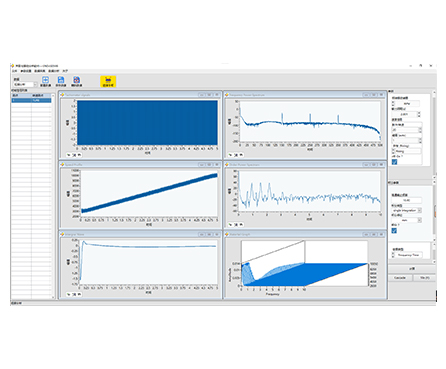
HP-STAP Torsional Vibration Analysis Software is designed to evaluate torsional vibration (torsional oscillation)—a vibration form that differs from typical translational vibration. It focuses on torsional behavior caused by alternating/oscillating torque, helping engineers assess risks such as structural fatigue, as well as related vibration, noise, and comfort (NVH) concerns.
| Purpose-built for torsional vibration | Targets torsional oscillation rather than treating it like standard vibration only |
|---|---|
| Torque-driven insight | Helps interpret torsional behavior as a result of alternating torque |
| Reduce fatigue risk | Supports analysis linked to structural fatigue concerns caused by torsional vibration |
| Improve NVH outcomes | Addresses torsional sources that can drive vibration, noise, and comfort problems |
| Better troubleshooting | Helps identify when torsional vibration is present alongside other vibration phenomena |
Series: HP-STAP
Product Type: Torsional vibration analysis software
What It Analyzes:
Torsional vibration / torsional oscillation
Alternating torque behavior (torque ripple effects)
Why It Matters: Torsional vibration can lead to fatigue damage, and can also contribute to vibration, noise, and comfort issues
Torsional vibration is not the same as “regular vibration.” Instead of linear motion, it describes twisting oscillation in shafts, drivetrains, and rotating structures. In many systems, torsional vibration is a different expression of alternating torque, and it often appears alongside other vibration behaviors. HP-STAP helps you observe, interpret, and document torsional vibration so you can improve design robustness and reduce NVH risk.
Drivetrain and rotating machinery torsional vibration investigation
Motor/engine torque ripple evaluation and related vibration/noise issues
Shafting systems, couplings, gear-driven systems torsional behavior review
Product NVH improvement projects (noise, vibration, comfort)
Reliability engineering and durability validation where torsional fatigue is a risk
(Kept general to avoid adding specs not shown in the image.)
Works with time-domain measurement signals used in rotating system testing and diagnostics
Suitable for test setups where torsional vibration is evaluated together with overall vibration/NVH data (specific sensors depend on your measurement configuration)
(Only capability-level items, without inventing numeric ranges.)
Torsional vibration (torsional oscillation) analysis workflow
Interpretation aligned to alternating torque behavior
Outputs suitable for identifying torsional vibration presence and its impact on fatigue/NVH (exact export/report options depend on your software build)
Q1: What is torsional vibration?
Torsional vibration (torsional oscillation) is a twisting-type vibration and is different from common translational vibration.
Q2: What typically causes torsional vibration?
It is often another manifestation of alternating/oscillating torque in rotating systems.
Q3: Does torsional vibration occur alone?
It commonly appears together with other vibration phenomena in rotating structures and drivetrains.
Q4: Why should I care about torsional vibration?
It can lead to structural fatigue, and it can also contribute to vibration, noise, and comfort (NVH) problems.
Q5: Is this useful for drivetrain NVH work?
Yes. Torsional vibration is a frequent root cause of NVH issues in rotating power transmission systems.