
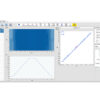
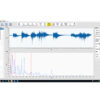
HP-STAP is a technical analysis software suite designed for fault diagnosis in rotating machinery. It helps engineers interpret vibration signals and rotor behavior using classic diagnostic plots and bearing-fault feature analysis, so you can identify problems faster and plan corrective action with confidence.
| Faster fault isolation | Move from raw waveform/spectrum to diagnostic plots that highlight likely fault mechanisms. |
|---|---|
| Better bearing diagnosis | Bearing characteristic features help confirm bearing-related issues sooner. |
| Clear speed tracking | Bode plot analysis makes resonance, instability, and speed-related changes easier to interpret. |
| Rotor behavior insight | Shaft orbit and shaft center position views support deeper rotor-dynamics troubleshooting. |
| More consistent decisions | Standard diagnostic plots help teams align on the same evidence. |
Product line: HP-STAP Series
Category: Fault Diagnosis / Technical Analysis Software
Key analysis capabilities:
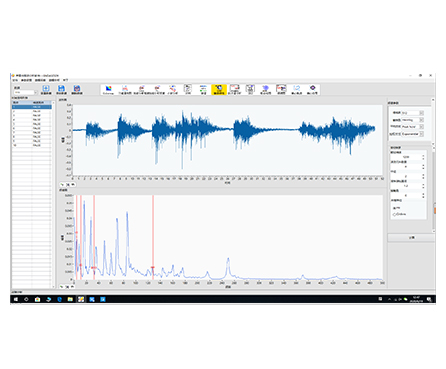
Bearing fault characteristics (feature identification for bearing-related issues)
Polar plot (vector/phase relationship visualization)
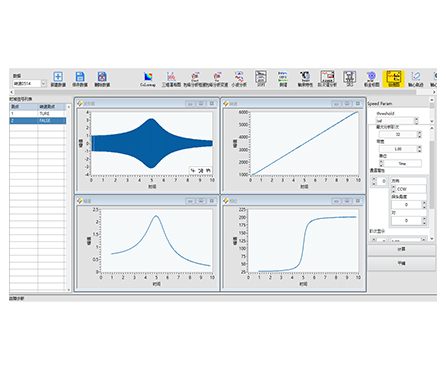
Bode plot (amplitude & phase versus speed)
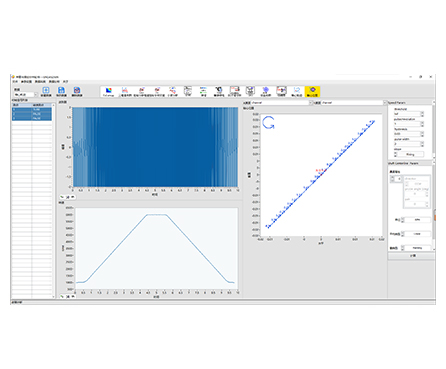
Shaft orbit & shaft center position (rotor motion and position assessment)
HP-STAP focuses on the most common diagnostic needs for rotating assets—especially where speed-dependent vibration and bearing condition are critical. By combining bearing feature analysis with polar and Bode plots, plus shaft orbit/center position visualization, it provides a practical workflow for:
spotting abnormal behavior,
understanding how vibration changes with speed,
and linking symptoms to likely root causes (e.g., bearing defects, imbalance, misalignment, rotor instability).
Rotating machinery troubleshooting (motors, pumps, fans, compressors, turbines, spindles)
Predictive maintenance (PdM) and condition monitoring programs
Commissioning and run-up/coast-down analysis
Bearing fault verification and post-repair validation
Rotor dynamics checks (orbit/center position behavior)
Designed for analysis of rotating-equipment signal data such as vibration and rotor motion signals.
Commonly used with datasets derived from:
vibration sensors (e.g., acceleration/velocity signals),
speed reference/tachometer signals (for run-up/coast-down),
rotor displacement/proximity measurements (for orbit/center position),
when provided by your measurement or acquisition system.
(Based on the product features shown in the provided Chinese product slide.)
Bearing Analysis: Bearing characteristic / feature-based diagnosis
Polar Plot: Vector/phase relationship visualization
Bode Plot: Amplitude & phase vs. rotational speed
Rotor Visualization: Shaft orbit plot + shaft center position display
1) What problems can HP-STAP help diagnose?
It supports common rotating machinery fault diagnosis, especially bearing-related issues and speed-dependent vibration behavior.
2) What is a Bode plot used for in vibration analysis?
A Bode plot visualizes amplitude and phase versus speed, helping reveal resonance, instability, and changes during run-up/coast-down.
3) What does a polar plot show?
Polar plots show the relationship between vibration magnitude and phase, which is useful for diagnosing dynamic behavior and changes across operating conditions.
4) What is shaft orbit analysis?
Shaft orbit displays rotor motion (typically in X-Y) and helps assess rotor stability, rubs, misalignment symptoms, and dynamic behavior.
5) What is “shaft center position”?
It indicates where the rotor is centered relative to its reference position—useful for understanding steady-state behavior and changes over time.
6) Is HP-STAP only for bearing faults?
No. Bearing feature analysis is a key capability, but the plot tools (polar/Bode/orbit/center position) support broader rotating machinery diagnosis.
7) Can this be used for run-up and coast-down troubleshooting?
Yes—Bode and polar plot workflows are commonly used for speed-dependent analysis and run-up/coast-down interpretation.
8) What should I prepare before analysis?
Provide clean vibration/rotor motion data and (when needed) speed reference information so speed-related plots are meaningful.