
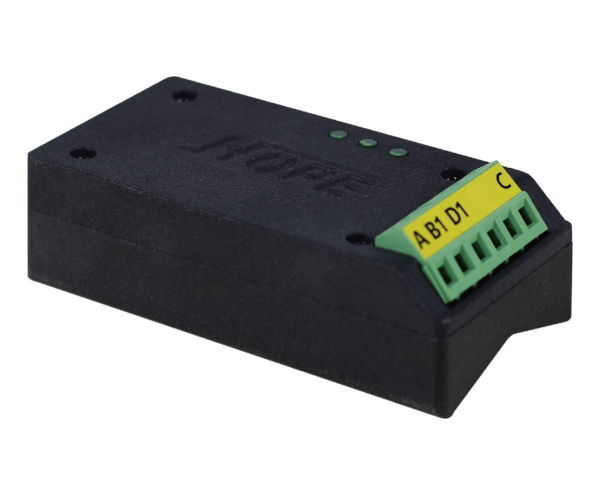
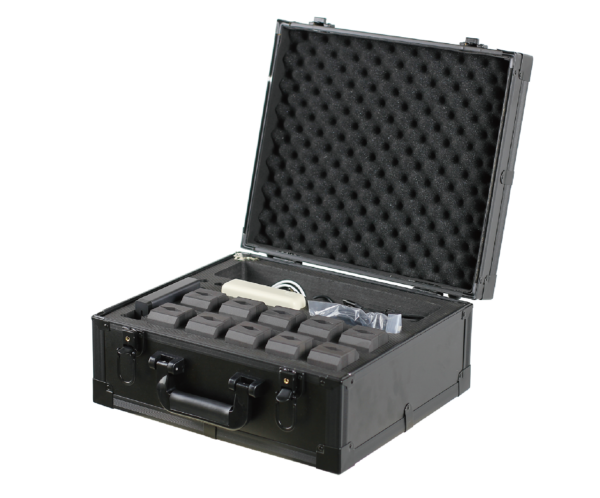
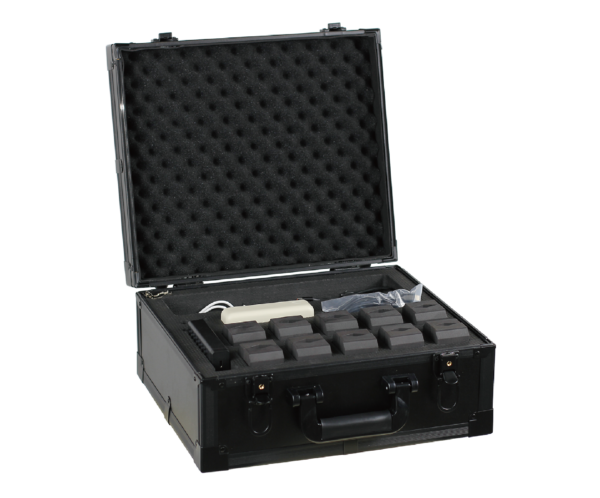
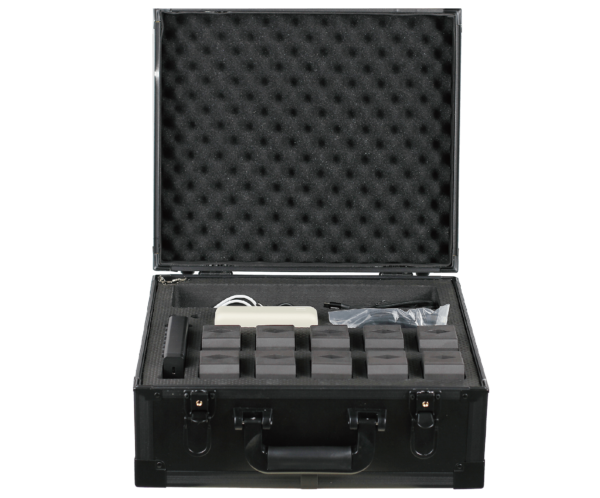
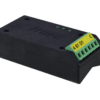
HP-NJ2A is a compact WiFi-based dynamic torque measurement system for rotating shafts. It supports up to 4kHz high-speed sampling, long-duration onboard logging, and built-in RPM measurement—ideal for field testing without long cable runs.
| Wireless installation | WiFi communication reduces cabling complexity and improves safety |
|---|---|
| High-speed dynamic capture | Up to 4kHz sampling for transient torque events |
| Long-duration data logging | 4GB onboard memory enables multi-day testing |
| Real-time results | Live torque display + RPM and real-time shaft power output |
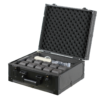
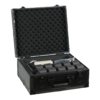
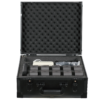
| Balanced mounting option | Optional symmetrical battery box helps maintain shaft balance during testing |
| Compact & low power | Optimized for field installation and extended operation |
Model: HP-NJ2A (4kHz)
Type: Wireless dynamic torque testing & analysis system (rotating shaft)
Measurement points: 2 strain points (analog) + 1 speed point (Hall switch digital)
Max sampling rate: Up to 4kHz (single-channel continuous)
Dual-channel mode: When sampling rate ≤ 100Hz, supports two channels acquired in parallel
Wireless: WiFi real-time data streaming + offline logging
Onboard storage: 4GB, supports ~6 days continuous recording at 4kHz
Power: Built-in lithium battery + optional external balanced battery box
Design: Lightweight, compact, low power, suitable for long-term use
HP-NJ2A is designed for dynamic torque testing on rotating components such as drive shafts, spindles, motors, and test rigs. Strain gauge signals (quarter/half/full bridge) are acquired through a high-resolution ADC, while a Hall switch measures rotational speed. Torque can be displayed in real time, and shaft power can be calculated and shown live using torque + RPM.
Dynamic torque testing for rotating machinery (motors, gearboxes, drivetrains)
Drive shaft torque + speed monitoring on test benches
Powertrain validation (torque ripple, start-up/load transients)
Industrial commissioning and troubleshooting where wired telemetry is difficult
Long-term torque trend monitoring with offline file storage
Strain gauge inputs (torque via strain):
Supports quarter-bridge (1/4), half-bridge, full-bridge
Configurable gauge factor / sensitivity coefficient
Speed input:
Built-in Hall switch (digital)
Supports pulse measurement (including multi-pulse measurement)
Data handling:
WiFi real-time continuous upload
Point upload / node storage / file upload
Offline acquisition with local file storage
Strain + speed points: 2 strain (analog) + 1 RPM (Hall digital)
ADC: 24-bit Σ-Δ ADC
Frequency response: DC to 300Hz (±0.1dB) at 4kHz sampling
Sampling rate: Up to 4kHz (single-channel continuous)
Dual-channel parallel acquisition: available when ≤ 100Hz
Range options: ±15000 με or ±30000 με
Resolution: 0.5 με
Bridge excitation: 1.2V or 2V (optional)
Noise: ±2 με (typical)
Accuracy: ±0.2% ±2 με
Gauge factor / sensitivity coefficient: 1.00–9.99 (configurable)
Supported bridge types: Quarter / Half / Full bridge
Type: Built-in Hall switch
Sensing gap: ~10mm (to the target/marker)
Range: 30 to 60000 rpm (supports single-pulse and multi-pulse)
Accuracy: better than 0.05% ±1 rev
Internal storage: 4GB (≈ 6 days at 4kHz continuous)
Offline data format: File
Max offline files: Up to 128, auto-saves time and test parameters
Wireless protocol: WiFi
Typical distance: ~10 m (line-of-sight)
Antenna: Built-in
Size: 80 × 40 × 25 mm
Weight: ~60 g (includes ~20 g internal battery)
Operating temperature: −20 to 85°C
Built-in battery: 3.7V 900mAh, runtime < 4 hours
Optional external balanced battery box: 3.7V 2000mAh, runtime < 10 hours
Optional external adapter: supports continuous operation
1) How does HP-NJ2A measure torque on a rotating shaft?
It measures strain from strain gauges on the shaft (bridge circuits) and converts it to torque after calibration.
2) Can it display torque in real time?
Yes. It provides real-time torque display, RPM, and calculated shaft power (torque + speed).
3) Do I need long cables on site?
No. WiFi communication minimizes wiring and simplifies installation.
4) How long can it record continuously?
With 4GB internal storage, it can store about 6 days of continuous data at 4kHz (depending on settings).
5) What bridge types are supported?
Quarter-bridge (1/4), half-bridge, and full-bridge.
6) What is the RPM range and method?
Built-in Hall switch, 30–60000 rpm, supports pulse and multi-pulse measurement.
7) What is the wireless range?
About 10 meters line-of-sight; obstacles and interference may reduce range.
8) How long does the battery last?
Built-in battery < 4 hours; optional external balanced battery box < 10 hours; external adapter supports continuous operation.