
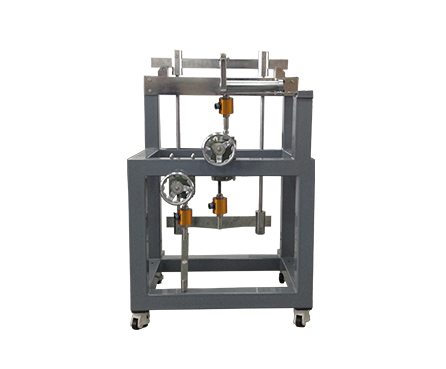
The HP-LX Series is a multifunction materials mechanics experimental platform designed for teaching and lab training. With one modular bench, you can run multiple classic strength-of-materials experiments while saving lab space, reducing equipment investment, and improving test efficiency through a user-friendly workflow.
| Multi-Experiment Platform | One system supports multiple strength-of-materials experiments, saving space and budget. |
|---|---|
| Easy to Operate | Friendly UI and simple procedures shorten training time for students and lab staff. |
| Higher Lab Efficiency | Increased automation reduces setup/operation time and boosts overall experiment efficiency. |
Product line: HP-LX Series
Product type: Multifunction materials mechanics / strength of materials experiment bench
Key design goals: multi-experiment capability, easy operation, high automation and efficiency
Included modules & accessories (as listed):
Main test bench frame with casters
Beam / member experiment system modules:
Cantilever beam
Eccentric tension rod
Concentric tension rod
Compression rod/column
Pure bending beam
Continuous beam
Laminated/stacked beam
Constant-strength beam
Combined bending-torsion beam
HPR-1 (5 kN) force sensor × 1
Strain gauge system:
120 Ω strain gauges × 40
3-direction strain rosette × 2
1.5 m color multi-core cable (90-core)
Solder terminals + adhesive (assorted)
The HP-LX Series combines a mobile bench frame and a configurable experiment beam system so instructors and lab teams can demonstrate and measure mechanical behavior across multiple loading conditions. Its simplified operating steps and friendly interface make it suitable for repeated classroom use, while higher automation helps reduce preparation time and improve lab throughput.
University and college strength of materials / mechanics of materials teaching labs
Vocational training labs for mechanical engineering fundamentals
Lab demonstrations for:
Beam bending behavior (including pure bending and continuous beams)
Tension/compression member behavior
Bending-torsion combined behavior
Strain measurement practice using strain gauges and rosettes
Force measurement: HPR-1 force sensor, 5 kN, quantity 1
Strain measurement:
120 Ω strain gauges (40 pcs) for general strain tests
3-direction strain rosettes (2 pcs) for multi-axis strain analysis
Wiring & connection:
1.5 m 90-core color cable
Solder terminals and adhesive included for installation and routing
Series: HP-LX
Bench frame: Mobile frame with casters
Force sensor: HPR-1, 5 kN, 1 pc
Strain gauges: 120 Ω, 40 pcs
Strain rosette: 3-direction, 2 pcs
Cable: 1.5 m, 90-core, color multi-core
Supported experiment beam/member types (module set): cantilever / eccentric & concentric tension rod / compression rod / pure bending / continuous / laminated / constant-strength / combined bending-torsion
Q1: What experiments can the HP-LX Series run?
A: It supports multiple classic strength-of-materials experiments using modular beam/member systems, including cantilever beam, pure bending, continuous beam, compression member, and combined bending-torsion.
Q2: Is it suitable for teaching labs with frequent student use?
A: Yes. It is designed for easier learning and operation, with simplified steps and a user-friendly workflow.
Q3: What force sensor is included?
A: The package includes HPR-1 (5 kN) force sensor × 1.
Q4: What strain measurement items are included?
A: A strain gauge system with 120 Ω strain gauges (40 pcs), 3-direction rosettes (2 pcs), plus cable, solder terminals, and adhesive.
Q5: Does the platform help improve lab efficiency?
A: Yes. Higher automation helps reduce preparation and operation time, improving overall experiment efficiency.
Q6: Is the bench easy to move and position in a lab?
A: The main frame includes casters, making it easier to move and organize within the lab.