
| Mixed-input measurement | n strong EMI environments, each channel can connect to different sensors to measure dynamic temperature, heat flux density, vibration acceleration, and other physical parameters. |
|---|---|
| High-speed synchronous sampling | All channels sample, display, and save synchronously; maximum sampling rate up to 100 MHz (software configurable). |
| Excitation output | Provides 24 V constant-voltage excitation. |
| Modular lightweight design | Modular and portable; measurement points can be customized and combined flexibly. |
| Power options for field work | Supports AC 220 V / 50 Hz or DC 12 V, and supports built-in 12.6 V lithium battery operation for independent field testing. |
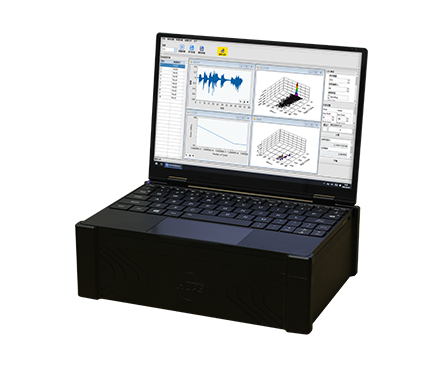
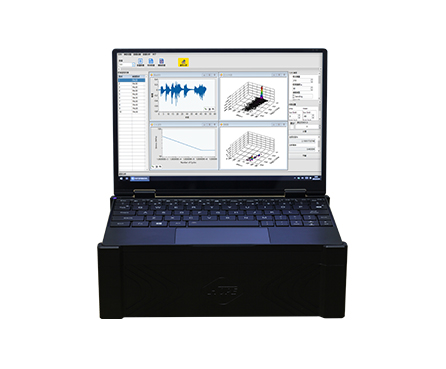
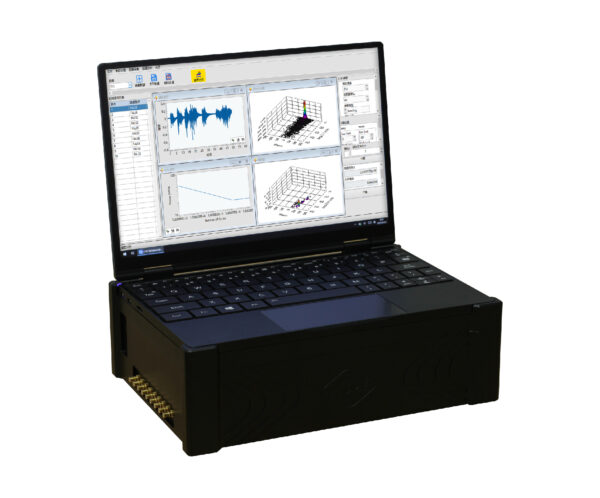
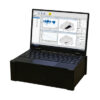
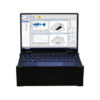
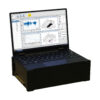
HP-GDS8 is a high-speed, 8-channel synchronous data acquisition and analysis system built for ultra-dynamic measurements in strong electromagnetic interference (EMI) environments. Each channel can connect to different sensors to capture high-frequency physical signals such as dynamic temperature, heat flux density, and vibration acceleration, with real-time display and recording to a PC via USB4.0.
Highlights
8 synchronized input channels for parallel sampling and aligned time base
Up to 100 MHz sampling rate (software configurable within 50–100 MHz range)
USB4.0 high-throughput link (up to 4000 MB/s) for fast streaming to PC
Portable power options (AC or DC, plus built-in 12.6 V lithium battery operation)
Channels: 8
Sampling rate: 50–100 MHz, all channels synchronous parallel sampling
ADC resolution: 16-bit
Measurement accuracy: ±0.2%
Signal bandwidth: 1–50 MHz
Measurement type: Voltage input ±1 V, ±5 V
Excitation: +12 V / +24 V optional (constant-voltage excitation; 24 V supported)
Communication interface: USB4.0, max transfer rate up to 4000 MB/s
Data storage mode: Real-time streaming & storage to PC; supports 100 MHz continuous acquisition for 5+ minutes
Trigger functions: Software trigger, internal trigger, external trigger, plus positive/negative delay triggering
Edge/level recognition: High/low level, rising edge, falling edge recognition (for synchronous triggering)
Power: AC 220 V / 50 Hz or DC 12 V; supports built-in 12.6 V lithium battery operation
Size / weight: 230 mm × 140 mm × 80 mm, 2 kg
Built-in system: Windows, 12th Gen i7, 16 GB RAM, 1 TB SSD, 10″ capacitive touch screen
High-frequency transient testing in strong EMI environments (shock/impact, blast-related field tests, etc.)
Vibration / acceleration capture where high bandwidth and synchronous channels matter
Ultra-dynamic voltage signal recording requiring 50–100 MHz sampling and fast PC streaming
Multi-sensor test setups where channels need aligned timing for correlation/phase analysis
HP-GDS8 main unit (built-in Windows system)
Power accessories (AC adapter/cable; DC cable if ordered)
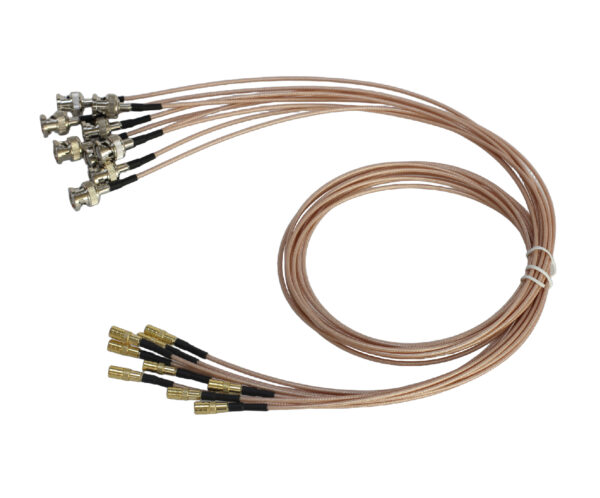
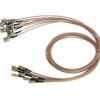
Data/communication cable(s) for USB4.0 connection
Acquisition & analysis software / drivers
Quick start guide / documentation
PC/Storage: At high sampling rates, data volume grows extremely fast. Use high-speed SSD storage and confirm the target recording duration before testing.
EMI best practice: Use proper shielding/grounding and keep sensor cables short where possible to reduce coupling noise.
Triggering: Configure level/edge trigger conditions early, then verify trigger stability with a short test run before long recording.
Power in field: When using battery operation, plan power budget and test duration (battery runtime depends on load and is not specified in the provided sheet).
Q1: Why are there “50–100M” and “1–50 MHz bandwidth” mentioned together?
A: “50–100M” refers to the sampling rate range (50–100 MHz), while “1–50 MHz” is the signal bandwidth. Bandwidth indicates the frequency content the system can effectively capture; sampling rate determines time resolution and anti-aliasing requirements.
Q2: Can all channels sample at 100 MHz at the same time?
A: Yes. The sheet states all channels synchronous parallel sampling within 50–100 MHz.
Q3: How long can it record at 100 MHz?
A: The provided spec says it supports 100 MHz continuous acquisition for 5+ minutes with real-time storage to a PC. Longer duration depends on PC storage throughput and capacity.
Q4: What input ranges does it support?
A: The provided spec lists voltage input ±1 V and ±5 V.
Q5: What excitation is available?
A: It supports constant-voltage excitation and indicates +12 V / +24 V optional, with 24 V supported.
Q6: What trigger modes are supported?
A: The spec includes software/internal/external triggers, plus positive/negative delay triggering and recognition of levels and edges (high/low, rising/falling).
Q7: Is it portable for field testing?
A: Yes. It supports AC220V/50Hz or DC12V, and also supports built-in 12.6 V lithium battery operation; the enclosure is 230×140×80 mm and 2 kg.