
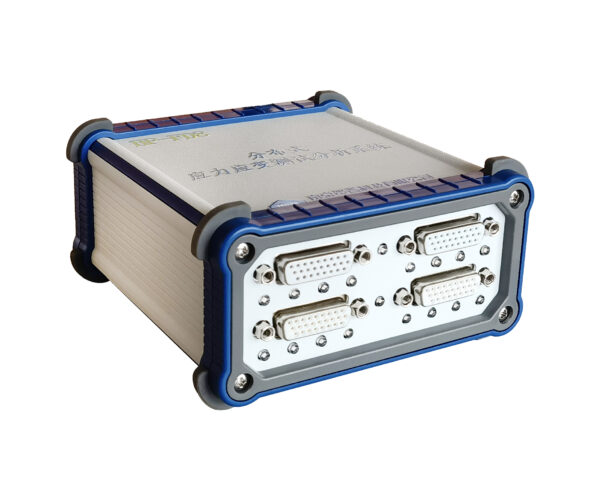
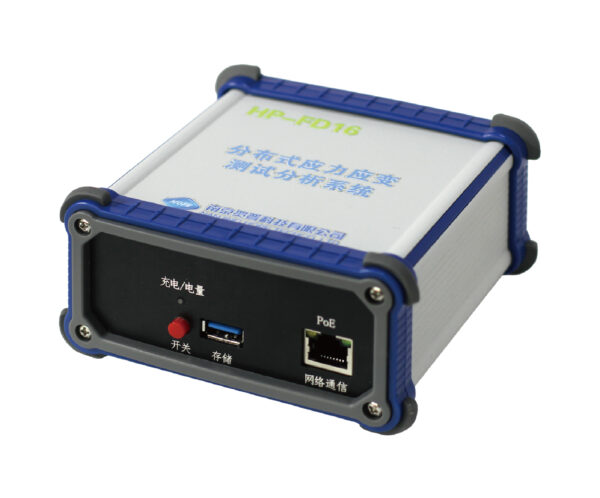
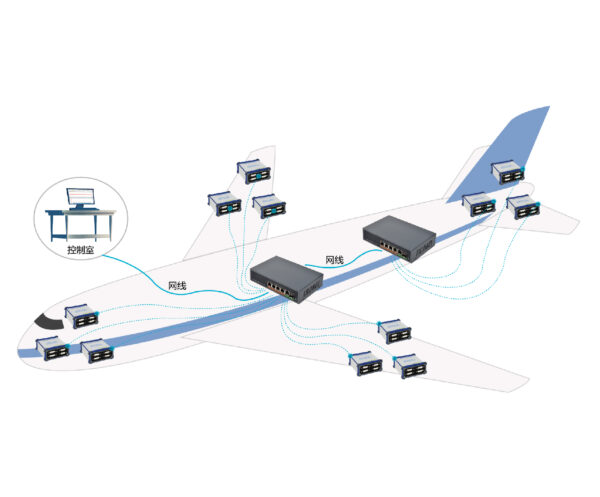
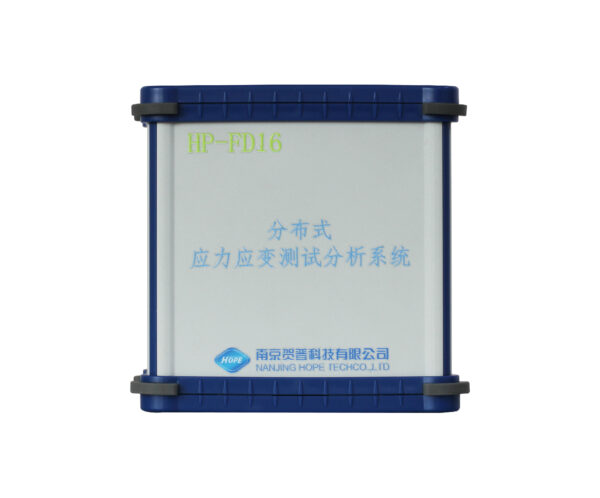
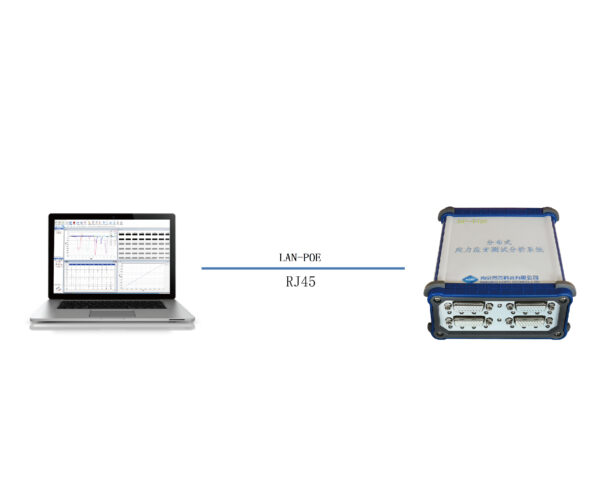
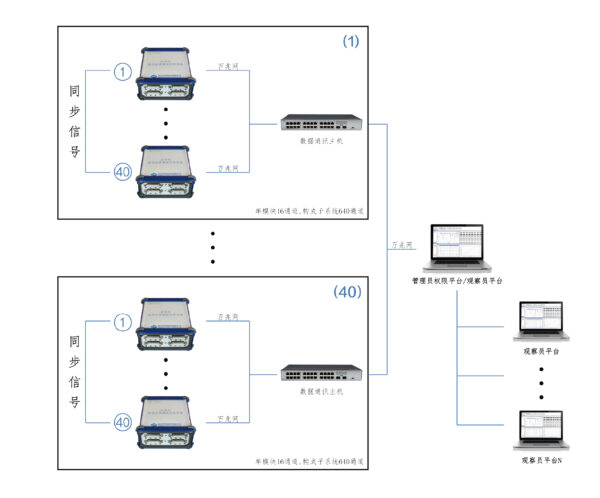
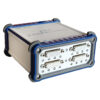
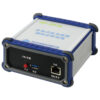


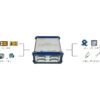
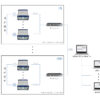
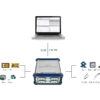
HP-FD is a distributed, modular strain/stress data acquisition system built for multi-point structural testing and field experiments. Each module supports 8 or 16 channels, with synchronized sampling up to 5 kHz per channel, and Gigabit Ethernet expansion for large-scale deployments (up to 1024 channels in one system).
| Distributed modular channels | Compact modular design. Choose 8/16 channels per acquisition module, then scale with Ethernet networking for large channel counts. |
|---|---|
| 24-bit precision, synchronous sampling | Each channel integrates signal conditioning + filtering + 24-bit Σ-Δ ADC, enabling stable, synchronized acquisition for engineering tests. |
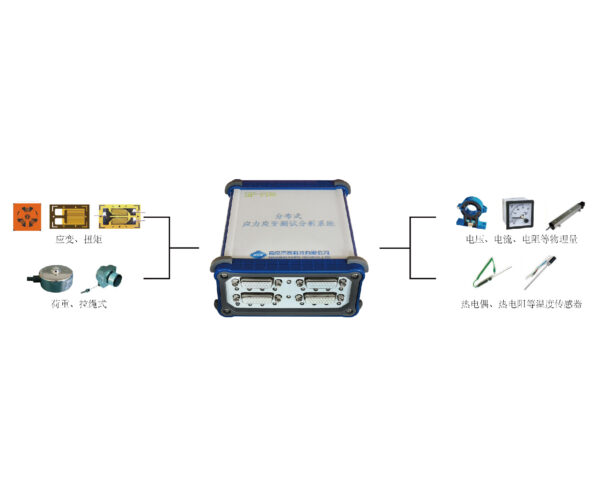
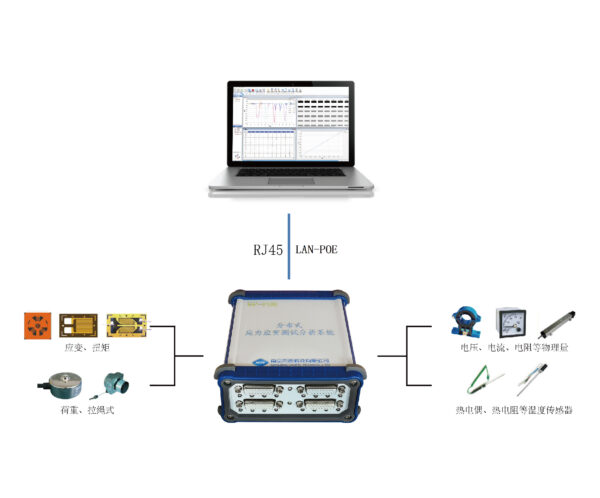
| Multi-sensor input support | Supports common test inputs including strain/stress, voltage, current, resistance, thermocouples, and RTDs—ideal for mixed-signal field measurement. |
| Field-ready operation | Modules integrate battery power, storage, and communication, designed for dispersed measurement points and on-site test campaigns. |
The HP-FD Series is a distributed strain gauge DAQ / structural test data logger designed for synchronous dynamic measurements across many locations. Its modular architecture makes it easy to deploy sensors across a bridge, building, tunnel, aircraft component, or mechanical structure—capturing strain response for load tests, displacement correlation, and modal/response studies.
Strain (bridge): Full bridge / Half bridge / Quarter bridge
Quarter bridge: 2-wire, 3-wire options
Voltage (differential ranges): ±10 mV, ±50 mV, ±100 mV, ±500 mV, ±1 V, ±5 V
Current: ±40 mA, 0–20 mA, 4–20 mA (no external shunt required)
Temperature: Thermocouples (K, S, E, N, J, T, R), RTD (PT100/PT1000), Thermistors (NTC/PTC)
Other typical channels: Resistance and related sensor types used in engineering testing
| Parameter | Specification |
|---|---|
| Measurement points | 8 or 16 channels per module, unlimited expansion via Ethernet networking |
| Sampling rate | Up to 5 kHz per channel, all channels synchronous parallel sampling |
| Input types | Strain/Stress, Voltage, Current, Resistance, Thermocouples, RTDs, etc. |
| Bridge configurations | Full / Half / Quarter, 3-wire quarter bridge supported |
| Strain ranges | ±10,000 με / ±32,768 με / ±50,000 με / ±100,000 με (multi-range) |
| Differential voltage ranges | ±10 mV / ±50 mV / ±100 mV / ±500 mV / ±1 V / ±5 V (multi-range) |
| Current ranges | ±40 mA, 0–20 mA, 4–20 mA |
| Temperature sensors | TC: K/S/E/N/J/T/R; RTD: PT100/PT1000; Thermistor: NTC/PTC |
| Lead-wire compensation | Per-channel auto lead resistance measurement & compensation |
| Smart wiring | Auto wiring recognition, auto import of setup parameters |
| Excitation | 2 VDC/50 mA or 5 VDC/50 mA, accuracy 0.1% ±1 mV |
| ADC / Resolution | 24-bit Σ-Δ ADC per channel, built-in anti-aliasing filtering |
| Measurement accuracy | ±0.1% |
| Trigger | Free trigger / External trigger / Internal trigger |
| Communication | Gigabit Ethernet |
| Power | Built-in high-capacity lithium battery, ≥ 8 hours field operation |
Structural load testing (bridges, buildings, industrial frames)
Distributed strain monitoring in field experiments
Lab-to-field structural response measurement
Multi-point sensor deployments where long cable runs are impractical
Modal/response studies and dynamic strain logging
Q1: Why choose a distributed DAQ instead of a centralized DAQ?
Distributed modules reduce long analog cable runs and simplify multi-point sensor layouts, especially for large structures and field tests.
Q2: Can I mix strain channels and temperature/voltage channels in one system?
Yes. HP-FD supports mixed sensor inputs (bridge strain + voltage/current + temperature) for multi-physics test setups.
Q3: How far can the system scale?
With Ethernet networking, modules can be expanded for high channel-count projects. Typical deployments scale from a few modules to large multi-module systems.