
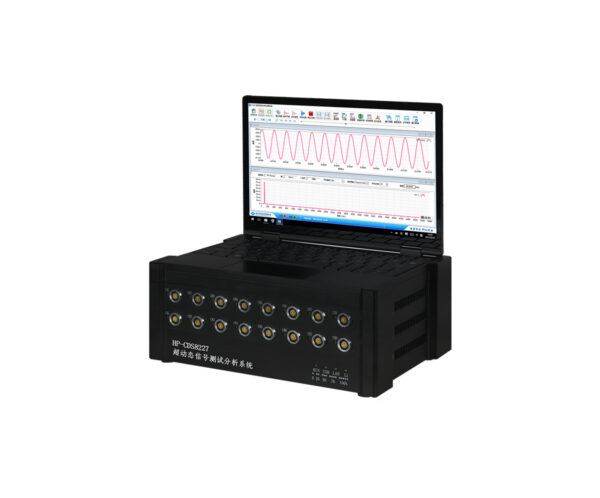
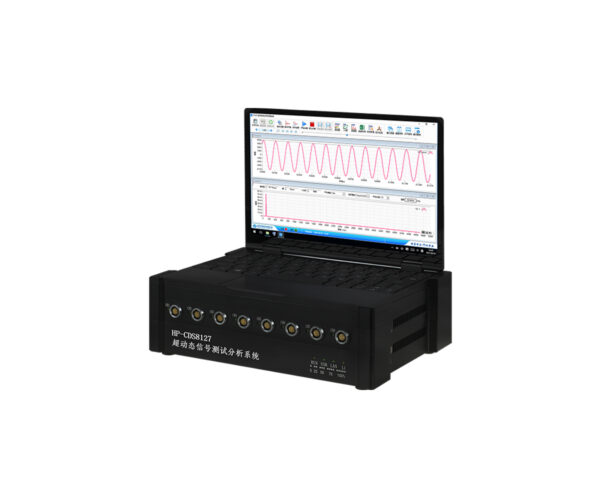
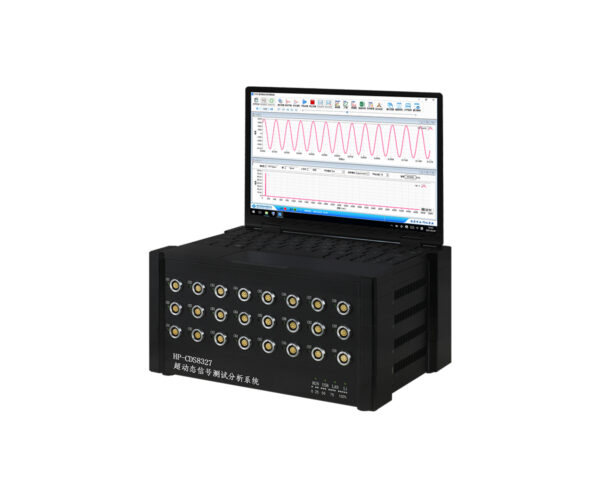
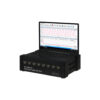
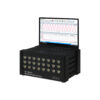
HP-CDS is a high-speed, multi-channel DAQ for ultra-dynamic testing in harsh EMI environments. It supports mixed sensor inputs on different channels, delivers up to 20 MHz synchronized sampling, and provides stable excitation for strain, voltage/current, and vibration (IEPE/ICP) measurements—ideal for shock, blast, impact, and high-speed transient tests.
| Mixed-input DAQ for harsh EMI sites | Each channel can connect to a different sensor type at the same time, enabling synchronized measurement of dynamic temperature, heat flux density, vibration acceleration, and more—even under strong electromagnetic interference. |
|---|---|
| Up to 20 MHz fully synchronized sampling | All measurement points sample, display, and store data in sync. The sampling rate can be configured by software up to 20 MHz. |
| Built-in excitation outputs | Provides 24 V constant-voltage excitation and flexible excitation options for common industrial sensors. |
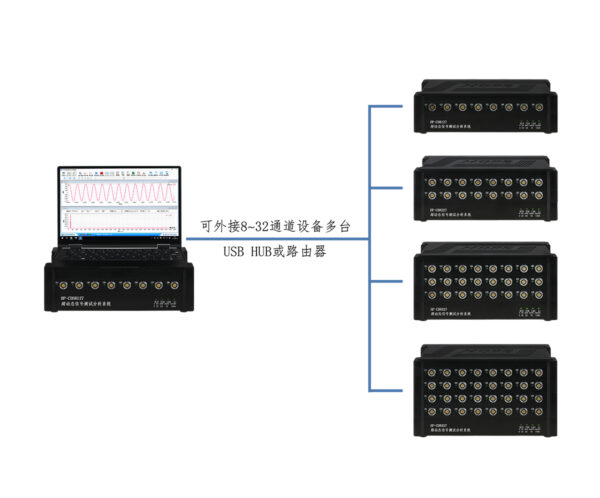
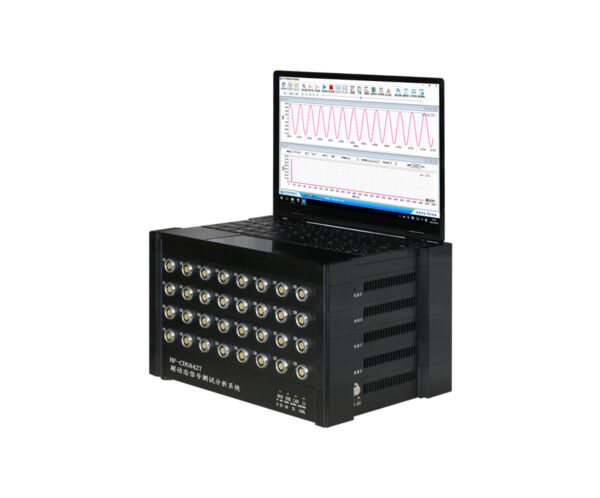
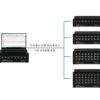
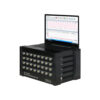
| Modular, lightweight, scalable | Modular and portable design. Channel count can be customized by stacking modules and networking multiple units for large-scale projects. |
| Field-ready power options | Supports AC 220V/50Hz or DC 12V, and can run on lithium battery power for fully independent field tests—especially suitable for outdoor blast/shock experiments. |
HP-CDS is an ultra-dynamic signal test & analysis DAQ system (2–20 MHz class) designed for high-speed transient measurement and multi-sensor synchronized acquisition. It combines high-rate sampling, reliable excitation, and modular scalability to support both lab and field deployments, including high-impact events where timing alignment across channels is critical.
Bridge (strain gauges): full bridge / half bridge / quarter bridge; 120 Ω / 350 Ω selectable
Voltage (AC/DC): ranges from ±5 mV to ±10 V
Current: ±40 mA / ±80 mA / 1–20 mA / 4–20 mA, no external shunt required
Vibration (acceleration/velocity): magnetic, resistive, capacitive, IEPE/ICP types
Supports mixed sensor access across channels for combined testing setups
| Parameter | Specification |
|---|---|
| Signal input channels | 8–32 channels per unit, multiple units can be networked into 1,000+ channel systems |
| Sampling rate | 1 Hz–20 MHz (software configurable), all channels synchronized parallel sampling |
| ADC resolution | 18-bit |
| System accuracy | ±0.2%, or custom ±0.1% |
| Signal bandwidth | 1–3 MHz |
| Bridge configurations | Full / half / quarter bridge; 120 Ω / 350 Ω bridge arm selectable |
| Voltage ranges (AC/DC) | ±5 mV, ±10 mV, ±50 mV, ±100 mV, ±500 mV, ±1 V, ±5 V, ±10 V |
| Current measurement | ±40 mA, ±80 mA, 1–20 mA, 4–20 mA (no external sampling resistor) |
| Excitation – programmable CV | 0–12 VDC / 50 mA, 1 mV step, accuracy 0.04% ± 1 mV |
| Excitation – programmable CC | 0.001–50 mADC, 1 μA step, accuracy 0.05% ± 2 μA |
| Fixed excitation | 24 VDC / 40 mA, ±15 VDC / 50 mA |
| IEPE constant current | Built-in 4 mA ±10% constant current + conditioning, 24 V compliance |
| Communication | USB 3.0 + Gigabit Ethernet |
| Data storage | Built-in 1 TB SSD, real-time offline storage; SSD data can be accessed via external display; optional dual-storage with control PC |
| Power | Module built-in 8.4 V / 3.5 Ah lithium battery (≥4 hours off-grid); optional baseboard 8.4 V / 30 Ah (up to ~12 hours off-grid) |
| Embedded system | Linux |
Q1: Can HP-CDS measure different sensor types on different channels at the same time?
Yes. HP-CDS supports mixed input—each channel can be configured independently so you can connect different sensors simultaneously and keep all channels synchronized.
Q2: What is the maximum sampling rate and are channels synchronized?
The system supports up to 20 MHz (software configurable). All channels run in synchronized parallel sampling for accurate time alignment.
Q3: Does it support IEPE/ICP accelerometers?
Yes. HP-CDS provides built-in IEPE constant-current (4 mA ±10%) with conditioning and 24 V compliance for IEPE/ICP vibration sensors.
Q4: How is data stored and exported?
It includes a built-in 1 TB SSD for real-time offline storage. Data can be accessed via external display and can be backed up together with a control PC (optional dual-storage setup).
Q5: Can it run in the field without AC power?
Yes. It supports DC 12V and lithium battery operation. Standard modules can run 4+ hours off-grid, with an optional large battery base for up to ~12 hours.