
Metro Tunnel Safety Monitoring
Project Name
Metro Tunnel Safety Monitoring
Nanjing Metro Line 10 Emergency Repair Project
Equipment Configuration
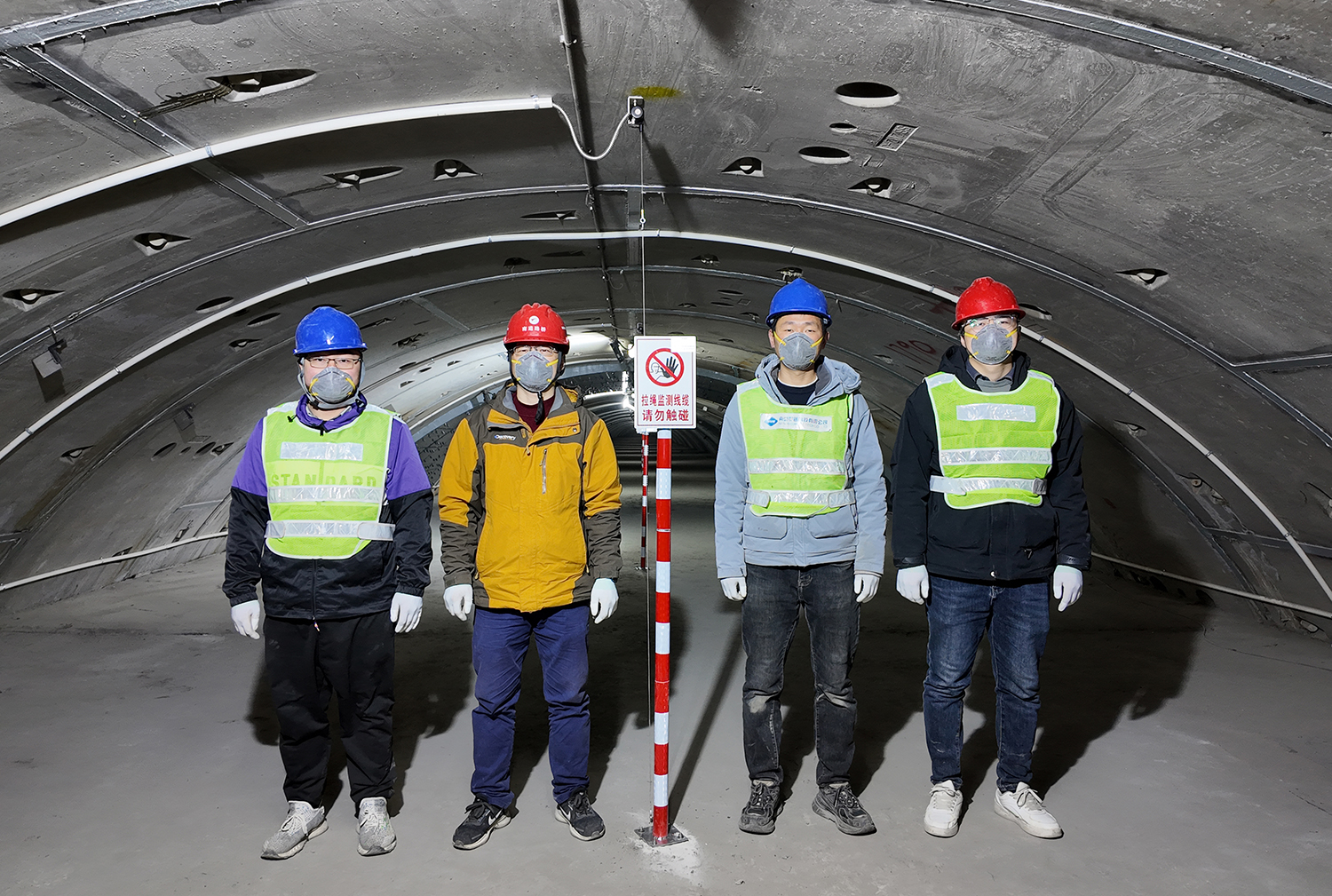
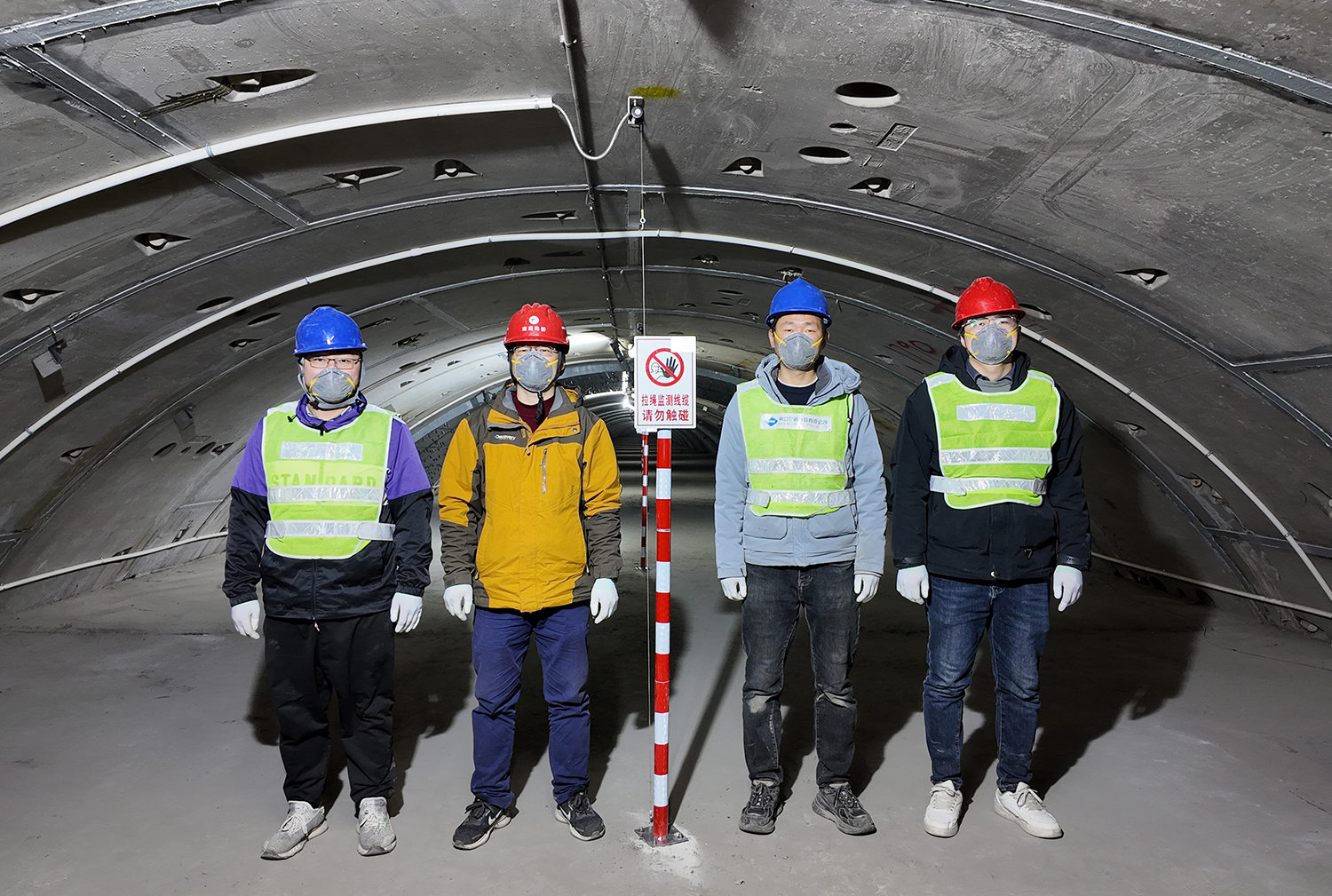
The monitoring system included one HP-YD Remote Online Monitoring System and one cable displacement sensor.
Project Description
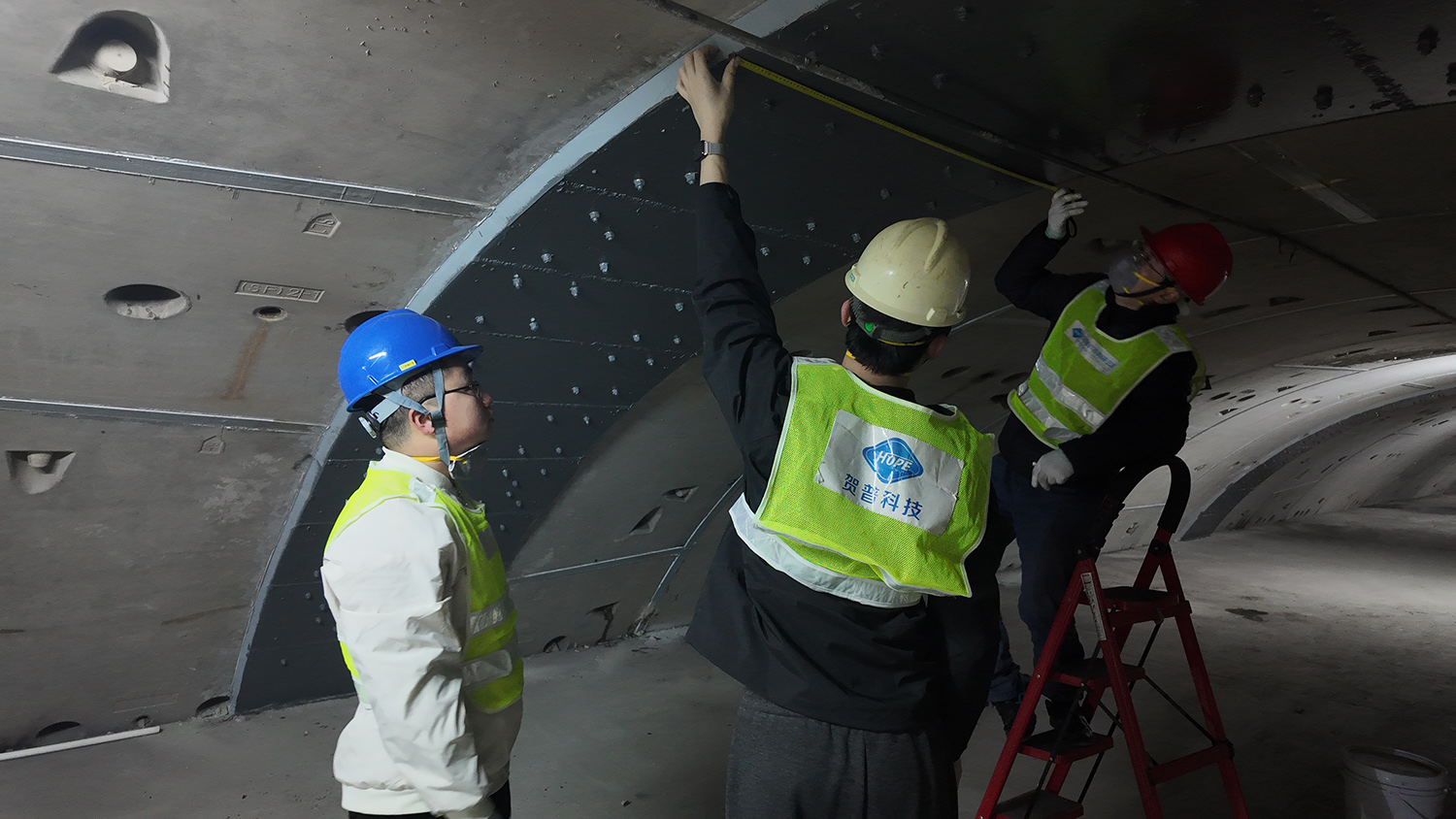
This project was conducted on the section between Jiangxizhou Station and Linjiang Station of Nanjing Metro Line 10, where groundwater leakage occurred at the underground intersection of Pukou Avenue and Hengjiang Avenue. The seepage significantly increased the safety risk of the tunnel structure, leading to an emergency suspension of operations and the initiation of sealing and repair works.
A remote online monitoring system was deployed to track structural displacement in real time during the emergency repair process. Cable displacement sensors were installed to continuously monitor deformation changes, providing critical data support for safety assessment and decision-making throughout the repair operation.
Project Background
In February 2025, groundwater seepage occurred in the section between Jiangxizhou Station and Linjiang Station on Nanjing Metro Line 10, at the underground intersection of Pukou Avenue and Hengjiang Avenue. This led to a sharp increase in structural safety risks, forcing an emergency suspension of operations and immediate repair works.
As one of the most challenging cross-river tunnels—featuring deep burial depth and high water pressure—the project required not only structural reinforcement but also continuous safety monitoring. Traditional inspection methods were insufficient to address such complex underground conditions.
Solution: HopeSafety Intelligent Monitoring System
HopeSafety deployed its Remote Static Online Monitoring System combined with multi-parameter sensing technologies to provide full-cycle technical support.
1. Multi-Parameter Sensor Deployment
- Displacement Monitoring
High-precision displacement sensors (accuracy up to 0.1 mm) were installed to capture structural deformation and identify potential damage zones. - Acceleration Monitoring
Accelerometers were used to analyze ground vibration effects on the tunnel, helping prevent secondary structural risks. - Pore Water Pressure & Earth Pressure Monitoring
Water pressure and soil pressure sensors were deployed to continuously track pressure variations in seepage zones, enabling evaluation of reinforcement effectiveness.
2. Remote Online Monitoring Platform
HopeSafety’s integrated remote monitoring platform enabled 24/7 real-time data transmission and visualization.
- Multi-source data integration for centralized monitoring
- Remote expert diagnosis and decision support
- Built-in analysis software generating pressure distribution maps and trend prediction reports
This provided a scientific basis for engineering decisions throughout the repair process.
3. Dynamic Optimization & Emergency Response
- The system automatically triggered threshold-based alarms
- Enabled rapid adjustment of construction strategies (e.g., grouting parameters, reinforcement sequencing)
- Supported real-time coordination with the metro emergency response team
Implementation Results
1. Efficient Risk Control
- The system issued three early warnings for localized pressure anomalies
- Construction teams adjusted grouting strategies in time, preventing secondary leakage
- Expert validation (including Academician Qian Qihu) confirmed that safety risks were effectively eliminated
2. Operational & Social Impact
- Ensured safe operation of emergency transport systems serving 25,000 passengers daily
- Supported dynamic coordination of bus replacement services
- Demonstrated the reliability of intelligent monitoring in complex geotechnical tunnel environments
Client Feedback & Industry Impact
Nanjing Metro Group highly recognized HopeSafety’s contribution:
“HopeSafety’s monitoring system not only improved repair efficiency, but also provided long-term data support for the safe operation of cross-river tunnels.”
The project was selected as a “Smart Operation & Maintenance Benchmark Case” in Nanjing’s rail transit system, promoting a shift from reactive repair to proactive risk prevention.
Conclusion
HopeSafety integrates advanced sensing technology with intelligent monitoring platforms to deliver a monitoring–warning–decision-making system for urban infrastructure.
The company will continue to advance innovation in underground structural health monitoring, supporting the development of smarter and safer cities.