
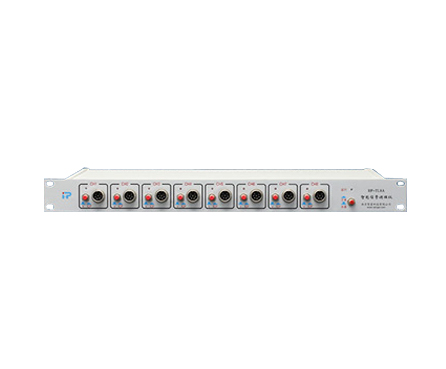
The HP-TL8A is an 8-channel dynamic intelligent signal conditioning instrument designed for multi-sensor test setups. With per-channel independent conditioning and strong anti-interference design, it helps you convert low-level sensor signals into stable standard outputs for reliable data acquisition in demanding industrial and field environments.
| 8 channels in one unit | Compact multi-point testing and simpler wiring |
|---|---|
| Independent channel configuration | Mix different sensor types in one test setup |
| High accuracy + stability | Clean, repeatable conditioning for reliable data acquisition |
| Strong anti-interference design | Performs well in noisy industrial/field environments |
| Bridge-ready measurement | Supports full/half/quarter bridge and completion resistance options |
| Fast zeroing & setup | Software manual balance + automatic balance without losing range |
| Standardized outputs | ±5 V / ±10 V outputs for easy DAQ integration |
| Software-based control: | No mechanical knobs, fewer manual errors and easier repeatability |
| RS485 connectivity | Stable long-distance communication with a standard PC host |
Series: HP-TL8A
Type: Intelligent, modular signal conditioner / bridge amplifier / multi-sensor conditioner
Channels: 8 CH (modular input)
Interface: RS485, plug-and-play to a standard PC
Typical use: Dynamic load / fatigue testing for structures and machinery (bridges, buildings, aircraft, ships, vehicles, cranes, rotating equipment)
HP-TL8A uses a modular architecture where each channel is configured independently (input type, range, amplification, balancing). It supports common transducer outputs used in structural testing and industrial measurement—such as strain/bridge sensors, voltage/current outputs, temperature sensors, and more—then delivers standardized voltage outputs (±5 V / ±10 V) for downstream instruments or DAQ systems.
Bridge & building structural monitoring (dynamic load, vibration, fatigue tests)
Vehicle, ship, aircraft component testing
Cranes, rotating machinery dynamic force & fatigue evaluation
Industrial test benches with mixed transducers (strain + pressure + temperature)
Field measurements where EMI and grounding conditions are challenging
Per channel selectable (isolated) input types typically include:
Strain/bridge sensors: full bridge, half bridge, quarter bridge (completion resistors supported)
Voltage inputs: ±10 mV, ±50 mV, ±100 mV, ±500 mV, ±1 V, ±5 V, ±10 V
Current inputs: ±10 mA, ±20 mA, ±80 mA, 0–20 mA, 4–20 mA
Temperature:
Thermocouple: 0–1500 °C
RTD: −50–300 °C
Pressure / load: piezoresistive pressure sensors, load cells
Displacement: strain type, resistive, capacitive, current output, laser displacement (depending on sensor output)
Input module channels: 8 CH
Conditioned output: standard voltage output, typically ±5 V or ±10 V
Strain ranges (software configurable): ±3000 με / ±30000 με / ±100000 με
Sensor excitation (typical): ±12 V
Output setting resolution / accuracy (typical): output accuracy ±1 mV (software set)
System uncertainty: ≤ ±3 mV
Isolation voltage: 4000 V
Manual balance: software sets unbalance point (supports special test requirements)
Auto balance: 16-bit A/D + algorithm control, no loss of measurement range
Bridge completion resistance options: 60–1000 Ω (full/half bridge), 120 Ω (quarter bridge)
Anti-interference: designed to work in strong electromagnetic environments (proper grounding required)
Dimensions (W×D×H): 483 × 424 × 60 mm
Weight: ≈ 1.5 kg
Q1: Can I mix sensor types on different channels?
Yes. Each channel can be configured independently, so you can combine strain/bridge, voltage, current, and temperature channels in one system.
Q2: What output does the HP-TL8A provide to my DAQ?
Standard conditioned voltage outputs are provided (typically ±5 V / ±10 V), making integration with common DAQ systems straightforward.
Q3: Do I need external bridge completion resistors for quarter/half bridge strain gauges?
Not necessarily. The unit supports bridge completion options (including quarter-bridge 120 Ω), simplifying wiring and setup.
Q4: How do I remove initial offset in strain measurement?
You can use manual balance (set offset via software) or auto balance (algorithm-based) to quickly zero channels without sacrificing range.
Q5: Is RS485 required?
RS485 is the standard control/communication interface for configuration and stable long-distance connectivity. A standard PC can be used as the host.