
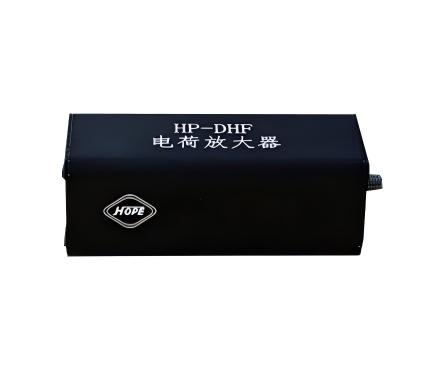
The HP-DHF Charge Amplifier is a compact, high-stability charge-to-voltage conditioning module designed to work with dynamic signal test & analysis systems. It amplifies and conditions the charge output from piezoelectric accelerometers, delivering clean, measurement-ready voltage signals for vibration and dynamic testing.
| Charge-to-Voltage Conditioning | Converts piezoelectric sensor charge output into analyzer-friendly voltage. |
|---|---|
| Compact & Portable | Small form factor for lab, field, and on-site troubleshooting. |
| Strong EMI Immunity | Designed for reliable operation in electrically noisy environments. |
| Selectable Charge Ranges | Multiple input charge ranges to match different sensor sensitivities and test levels. |
| Clean Signal Output | Low output noise and controlled distortion for accurate dynamic measurement. |
Product Series: HP-DHF
Product Type: Charge amplifier / charge conditioning module
Designed For: Piezoelectric charge-output accelerometers (and compatible charge-output piezo sensors)
Use With: Dynamic signal testing & analysis instruments / vibration analyzers
Core Value: Stable charge amplification + strong anti-interference performance in a portable module
Piezoelectric accelerometers often output charge (pC) rather than a standard voltage signal. The HP-DHF converts and amplifies that charge into a stable voltage output, making it easier to acquire signals with a DAQ or dynamic signal analyzer. With selectable input charge ranges and a wide usable bandwidth, HP-DHF supports both small-signal and high-level measurements in industrial test environments.
Vibration measurement and troubleshooting (motors, pumps, gearboxes, compressors)
Dynamic testing and modal/structural response measurements
Machinery condition monitoring and diagnostic data acquisition
Lab testing with dynamic signal analyzers / DAQ systems
Industrial test benches requiring stable piezoelectric charge signal conditioning
Supported Sensors:
Piezoelectric charge-output accelerometers
Compatible piezoelectric charge-output transducers (e.g., force/pressure sensors with charge output, if matched to range)
Input Channels: 1 channel
Charge Range Options (by configuration): ICA100C / ICA101C / ICA102C / ICA103C
Passband Bandwidth: 1 Hz to 10 kHz (-3 dB)
Input Channels: 1
Input Charge Range (selectable):
ICA103C: ±500 pC to ±50,000 pC
ICA102C: ±50 pC to ±5,000 pC
ICA101C: ±5 pC to ±500 pC
ICA100C: ±0.5 pC to ±50 pC
Distortion: < 1%
Output Noise: < 1 mV
Filter Cutoff Frequency: 10 kHz
Power Supply: ±12 V
Operating Temperature: -10°C to +50°C
Operating Humidity: < 85% RH (non-condensing)
1) What is a charge amplifier used for?
A charge amplifier converts a piezoelectric sensor’s charge output (pC) into a stable voltage output, enabling accurate measurement with DAQ systems or dynamic signal analyzers.
2) Is HP-DHF compatible with IEPE accelerometers?
HP-DHF is designed for charge-output piezoelectric accelerometers. IEPE sensors typically require constant-current power and use voltage output—choose the correct conditioner for your sensor type.
3) How do I choose the right input charge range (ICA100C–ICA103C)?
Match the range to your sensor sensitivity and expected signal level. Lower ranges suit small signals; higher ranges support larger charge outputs without saturation.
4) What instruments does HP-DHF work with?
It is intended to be used with dynamic signal test/analysis systems, vibration analyzers, and measurement setups that accept conditioned voltage signals.
5) Can it be used in industrial environments?
Yes—HP-DHF is built for strong anti-interference performance and stable conditioning in typical industrial test conditions.