
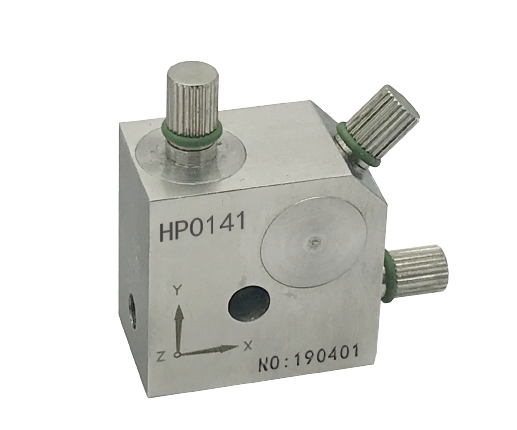
The HP-ICP1500 Series are industrial-grade IEPE (ICP®-type) piezoelectric accelerometers built for reliable vibration measurement in harsh environments. With options for single-axis and triaxial sensing, wide frequency coverage, and strong anti-interference performance, they are ideal for condition monitoring, machine fault diagnosis, and long-term industrial testing.
| Industrial reliability | Built for stable operation under harsh industrial conditions |
|---|---|
| High sensitivity | Detects small acceleration changes for early fault identification |
| Wide frequency response | Covers low-to-high frequency vibration measurement needs (model dependent) |
| Strong anti-interference | Resists electrical noise and environmental disturbances |
| Stable performance | Maintains consistent output under heat, humidity, and temperature changes |
| Rugged & durable | Designed to tolerate industrial shocks/vibration with long service life |
| Flexible selection | Single-axis and triaxial choices + multiple connector styles |
Series: HP-ICP1500
Product Type: IEPE piezoelectric accelerometer (industrial vibration sensor)
Axis Options: Single-axis & triaxial models
Key Strengths: High sensitivity, wide frequency response, strong anti-interference, stable operation in harsh conditions
Customization: Sensor core/sensitivity can be customized to meet different measurement needs
Typical Outputs / Connectors: L5 output (top/side) and aviation connector options (by model)
In industrial environments, vibration sensors must withstand temperature variation, electromagnetic interference, and continuous operation while still capturing small changes accurately. The HP-ICP1500 Series is designed for these realities—delivering stable, repeatable IEPE measurements for rotating machinery, structural vibration, and equipment health checks. Rugged construction supports long service life even under frequent impact and vibration exposure.
Industrial condition monitoring (CBM) and predictive maintenance
Motor, pump, fan, gearbox vibration testing
Bearing fault detection and rotating machinery diagnostics
Production line vibration QA and process verification
Structural vibration measurement in industrial equipment
Long-duration monitoring in noisy EMI environments
IEPE/ICP® interface: Compatible with IEPE constant-current measurement inputs (typical ICP accelerometer workflows)
Single-axis & triaxial output: Choose by application (directional measurement vs multi-axis vibration)
Connector options: L5 output (top/side) and aviation connector variants (by model)
Single-Axis Models
HPICP152
Sensitivity: 10 mV/g
Frequency Range: 0.5–10 kHz
Resonant Frequency: ~40 kHz
Range: 5000 m/s²
Temperature: -20 to +80 °C
Output: Top L5
Direction: Single-axis
Weight: 12 g
Size: Ø13 × 22 mm
HPICP112
Sensitivity: 50 mV/g
Frequency Range: 0.5–5 kHz
Resonant Frequency: ~30 kHz
Range: 1000 m/s²
Temperature: -20 to +80 °C
Output: Top L5
Direction: Single-axis
Weight: 25 g
Size: Ø18 × 27 mm
HPICP151
Sensitivity: 100 mV/g
Frequency Range: 0.7–3 kHz
Resonant Frequency: ~24 kHz
Range: 500 m/s²
Temperature: -20 to +80 °C
Output: L5
Direction: Single-axis
Weight: 96 g
Size: 29 × 29 × 17 mm
HPICP150
Sensitivity: 1000 mV/g
Frequency Range: 0.1–1 kHz
Resonant Frequency: ~5 kHz
Range: 50 m/s²
Temperature: -20 to +80 °C
Output: Side L5
Direction: Single-axis
Weight: 220 g
Size: Ø38 × 35 mm
Triaxial Models
HPICP352
Sensitivity: 10 mV/g
Frequency Range: 0.5–5 kHz
Resonant Frequency: ~20 kHz
Range: 500 m/s²
Temperature: -20 to +80 °C
Output: Top aviation connector
Direction: Triaxial
Weight: 85 g
Size: Ø25 × 52 mm
HPICP351
Sensitivity: 100 mV/g
Frequency Range: 0.5–2 kHz
Resonant Frequency: ~20 kHz
Range: 500 m/s²
Temperature: -20 to +80 °C
Output: Side aviation connector
Direction: Triaxial
Weight: 85 g
Size: Ø25 × 52 mm
HPICP350
Sensitivity: 1000 mV/g
Frequency Range: 0.3–1 kHz
Resonant Frequency: ~23 kHz
Range: 500 m/s²
Temperature: -20 to +80 °C
Output: Top aviation connector
Direction: Triaxial
Weight: 95 g
Size: Ø25 × 55 mm
Q1: What is an IEPE (ICP®) accelerometer?
It’s a piezoelectric accelerometer with built-in electronics that works with constant-current signal conditioning, commonly used for industrial vibration measurement.
Q2: How do I choose single-axis vs triaxial?
Choose single-axis when vibration direction is known and you want a simpler setup.
Choose triaxial when direction is uncertain or you need full 3D vibration characterization.
Q3: Why does resonant frequency matter?
Higher resonant frequency generally supports cleaner measurement in the working band and helps reduce resonance-related distortion.
Q4: Which model is best for low-frequency vibration?
Models with lower frequency range start points (e.g., 0.1 kHz / 0.3 kHz / 0.5 kHz, depending on your target band) are typically selected for lower-frequency monitoring needs.
Q5: Can the sensor be customized?
Yes. The series supports customization of sensitive element configuration/sensitivity to meet different measurement requirements.