
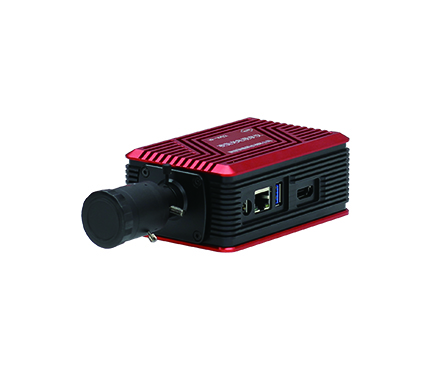
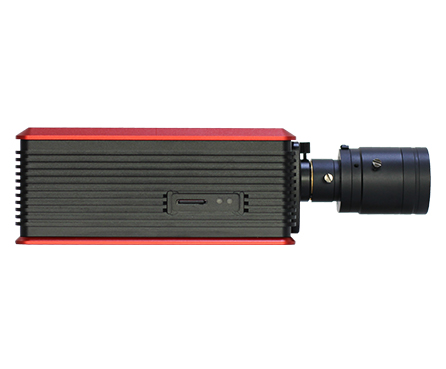
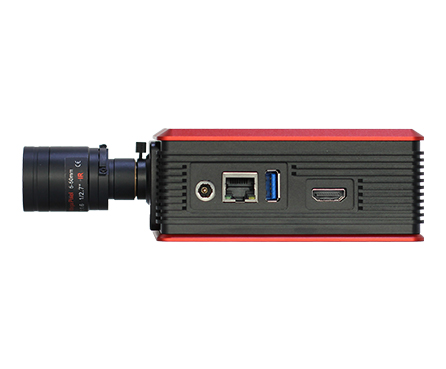
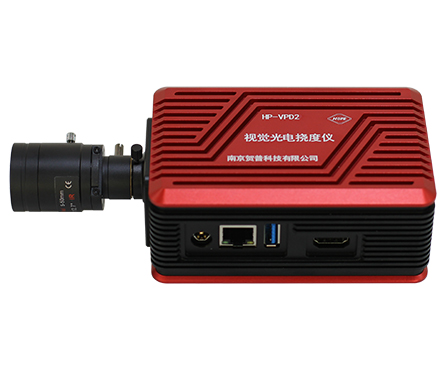
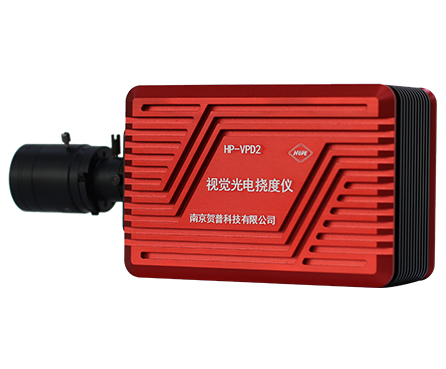
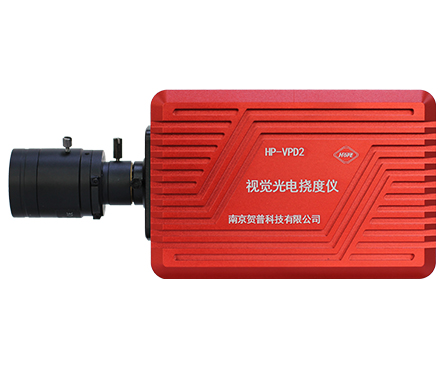
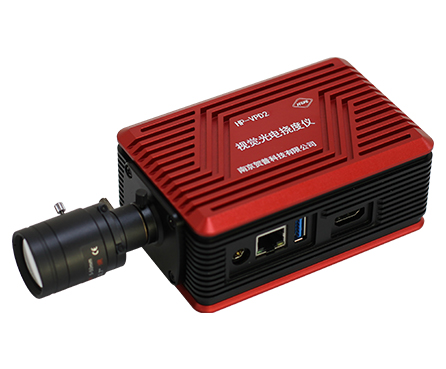
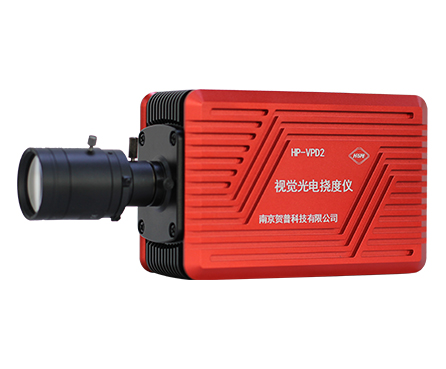
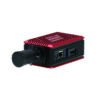
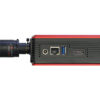
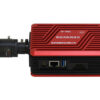
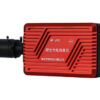
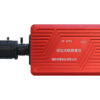
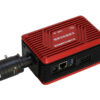
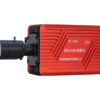
HP-VPD2 is a camera-based, non-contact deflection and displacement monitoring instrument designed for long-range structural measurement. It supports multi-target scanning, threshold-triggered photo capture, and continuous unattended monitoring with optional lithium battery + 100W solar power—ideal for remote, outdoor deployments.
| Non-contact monitoring | Measures displacement without touching the structure, improving safety and avoiding contact-induced interference. |
|---|---|
| Sub-millimeter accuracy | Uses high-resolution imaging and sub-pixel technology for high-precision displacement measurement. |
| Long measurement distance | Supports 5–500 m (lens dependent), suitable for large structures and hard-to-reach points. |
| Multi-target scanning | Tracks multiple passive targets within 1–400 m without changing the lens. |
| Unattended deployment | Optional lithium battery + 100W solar enables continuous online monitoring in remote sites. |
| Smart event capture | Threshold trigger can link to a camera for automatic photo capture when events occur. |
| Reliable connectivity | Built-in Gigabit Ethernet plus optional 4G/Wi-Fi; supports offline operation when needed. |
| Low power consumption | ≤5W for energy-efficient long-term monitoring. |
Product Type: Visual photoelectric deflection meter (optical, non-contact)
Measurement Output: 2D deformation monitoring (vertical deflection + horizontal displacement)
Multi-Target Monitoring: Measures multiple passive targets within the same scene (no lens change required for multi-target within the supported range)
Outdoor Ready: Water/dust protection with IP65-level design (IP65 requires an additional protective cover)
Remote/Unattended Operation: Built-in Ethernet + optional 4G/Wi-Fi, supports offline work, and cloud synchronization
Data Safety: Local storage + cloud upload for dual backup
HP-VPD2 captures image data using a high-resolution imaging sensor and processes displacement through optical methods (including sub-pixel techniques). By monitoring passive targets from a distance, it avoids physical contact with structures, improving safety and reducing the risk of altering real structural behavior during measurement. The system can be configured to trigger linked photo capture when a threshold is reached, enabling event-based documentation.
Bridge deflection and displacement monitoring (static or long-term observation)
Building/roof beam deformation tracking
Industrial structure monitoring (steel frames, platforms, racks)
Construction site deformation observation (temporary supports, beams, formwork)
Remote outdoor monitoring points where cabling is difficult (solar/battery deployments)
Event-based monitoring where threshold alarms require visual evidence (auto photo capture)
Primary sensing: Built-in optical imaging (camera-based) displacement measurement using image data
Targets supported: Multiple passive targets within the monitored field of view
Trigger / event linkage: Threshold-based triggering to link camera photo capture
Communication options: Built-in Gigabit Ethernet, optional 4G and Wi-Fi
Supported protocols: TCP, UDP, MQTT, Modbus (private protocol customization supported)
Measurement distance: 5–500 m (different focal-length lenses required; other distances customizable)
Displacement range: 0.01 mm to 300 m (large deformation)
Displacement accuracy:
±0.1 mm (distance ≤ 20 m)
±0.2 mm (distance ≤ 50 m)
±0.5 mm (distance ≤ 100 m)
1 mm (distance ≤ 200 m)
Field-of-view width (reference):
14 m (at 20 m distance)
±35 m (at 50 m distance)
75 m (at 100 m distance)
140 m (at 200 m distance)
Sampling rate:
Single point ≤ 100 Hz
Two points ≤ 50 Hz
30 points ≤ 20 Hz
100 points ≤ 1 Hz
Other point counts customizable
Measurement direction: 2D deformation (vertical deflection + horizontal displacement)
Acquisition modes: Continuous / Scheduled / External trigger; duration configurable
Storage: Local 32 GB SSD + cloud synchronization (dual backup)
Software features: Horizontal & vertical displacement curves, displacement values, real-time image display, cloud platform integration, historical data review, data resume/continuation
Power supply (standard): AC 220V adapter
Power supply (optional): Lithium battery + 100W solar for continuous online monitoring
On-site power: DC 8–36V; optional 60Ah lithium battery (up to 7 days off-grid) + 100W solar panel
Power consumption: ≤ 5W
Protection rating: IP65 (requires additional protective cover)
Q1: What is HP-VPD2 used for?
A: It is used for long-range, non-contact monitoring of deflection and 2D displacement (vertical + horizontal) on structures like bridges, beams, and buildings.
Q2: Can it measure multiple points at the same time?
A: Yes. It supports multi-target scanning and multi-point sampling, with different maximum sampling rates depending on the number of points.
Q3: Does it require physical sensors attached to the structure?
A: No. HP-VPD2 is non-contact and uses optical image data to compute displacement, reducing installation risks and interference.
Q4: How does it work in remote outdoor locations?
A: It supports AC power, DC 8–36V, and optional lithium battery + 100W solar for continuous unattended monitoring. It also supports Ethernet/4G/Wi-Fi and offline operation.
Q5: Can it automatically record events when deformation exceeds a limit?
A: Yes. You can set a threshold to trigger linked photo capture for event documentation.
Q6: Is the device waterproof?
A: With the proper protective cover installed, it can reach IP65 protection for outdoor environments.