
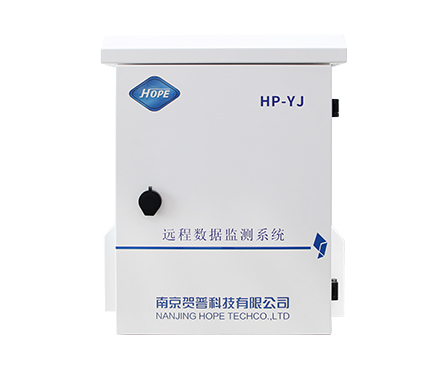
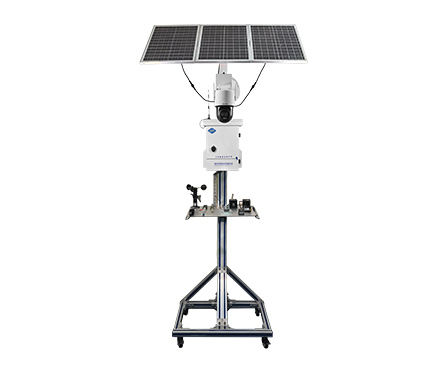
HP-YJ32 is a modular remote monitoring system designed for long-term static and low-frequency measurements. It collects multi-sensor data, stores it locally on a 64GB TF card, and can upload to a server via GPRS/4G or RJ45 LAN for reliable, always-on field monitoring.
| Remote 4G/GPRS Monitoring | Send static monitoring data to a server in real time for unattended sites. |
|---|---|
| Multi-Signal Universal Input | One system supports strain, voltage, current, temperature, displacement, vibrating-wire frequency, and RS485 signals. |
| Scalable Modular Design | Modular controller + power + acquisition modules quickly build a 4–32 channel online monitoring system. |
| Dual Data Backup | Local TF card storage (64GB) plus cloud/server transmission, reducing data-loss risk. |
| Resume After Interruption | Supports breakpoint/continuous transfer to maintain data continuity during network drops. |
| Flexible Power Options | AC 220V, lithium battery, and optional solar panel for long-term outdoor operation. |
| Field-Ready Outdoor Protection | Designed for −20°C to 60°C outdoor environments with rainproof, dustproof, and lightning protection. |
| High Accuracy & 24-bit Sampling | Up to 0.2% accuracy with 24-bit ADC for stable static measurements. |
Remote connectivity: Upload data to a server via GPRS/4G, or connect locally via USB, RJ45 Ethernet, or 433MHz wireless (up to 200 m)
Multi-signal input: Supports strain, temperature, displacement, settlement, crack, gas composition, vibrating-wire frequency, and RS485 digital signals
Modular architecture: Main control + power management + signal acquisition modules for fast system build-out
Dual data backup: Local TF storage + cloud/server upload (supports resume after interruption)
Flexible power: AC 220V or lithium battery power; optional solar charging for continuous outdoor operation
The HP-YJ32 is built for projects that require remote static monitoring, such as geotechnical instrumentation and structural health monitoring. Each channel can be configured independently, allowing mixed sensor types in the same system. With dual storage and multiple communication options, it reduces site visits while improving data continuity and traceability.
Geotechnical monitoring: slopes, excavations, retaining structures, foundations, ground settlement
Structural health monitoring (SHM): bridges, tunnels, buildings, dams
Deformation & displacement tracking: inclinometers, displacement transducers, crack gauges
Hydro & earth pressure monitoring: pore water pressure, earth pressure, load/force monitoring
Environmental/industrial monitoring: temperature, flow, level, and related static process signals
Supported measurement/input types (per-channel configurable):
Strain (bridge): 1/4 bridge (2-wire), 1/4 bridge (3-wire), 1/4 bridge compensation
Range: ±32768 με
Vibrating-wire sensors: (e.g., pore pressure, deformation, air pressure, temperature)
Frequency range: 450–5000 Hz
Current: 0–20 mA, 4–20 mA (resolution 1 μA)
Voltage: ±50 mV, ±100 mV, ±500 mV, ±1 V, ±2.5 V, ±5 V, ±10 V (resolution 1 μV)
Thermocouple: 0–1500°C (resolution 1°C)
Displacement ranges (typical): 0–10 mm / 0–50 mm / 0–100 mm / 0–200 mm
Pressure & force: resistive pressure sensors, load cells
Other sensors (examples): tilt/inclination, settlement, cracks, liquid level, flow, velocity, temperature, pore water pressure, earth pressure, etc.
Digital: RS485 (supported as a signal input category)
Channel count (measurement points): 4–32 channels
Sampling rate: 0.0001 Hz to 1 Hz (software configurable)
Adjustable from 1 sample/second to 1 sample/day
Acquisition: Independent ADC per channel; MCU acquisition; independent input type per channel
Accuracy: 0.2% (Class 0.2)
ADC resolution: 24-bit
Linearity: ≤ 0.001
Stability (4 hours): ±4 counts / 4h; ±1 count / °C
Sensor excitation (selectable): 2.5 V / 5 V / 12 V / 24 V
Sensitivity coefficient: 0.01–9.99 (linearly adjustable)
Communication: USB, 433MHz wireless (200 m), RJ45 Ethernet, GPRS/4G (remote)
Storage: TF card (local); GPRS/4G upload to server (supports resume after interruption)
Power: 220V AC, or 12.6V 40A lithium battery + 100W solar panel option for non-stop operation
Dimensions (L×W×H): 280 × 220 × 100 mm
Installation: Hanging bracket fixation, custom aluminum-profile bracket support, wall mounting, etc.
Operating environment: Outdoor exposure −20°C to 60°C, rainproof, dustproof, lightning protection design
1) What is the typical use case for HP-YJ32?
Long-term remote monitoring of static/slow-changing signals in SHM and geotechnical projects (settlement, displacement, strain, pressure, temperature, cracks, etc.).
2) Can I mix different sensor types in one system?
Yes. Each channel can be configured independently for different input types (voltage/current/bridge/vibrating-wire/thermocouple, etc.).
3) How often can it record data?
From 1 sample/second down to 1 sample/day (0.0001–1 Hz), set by software.
4) How does it prevent data loss?
It supports dual backup: local TF card storage plus remote server upload, including resume after communication interruption.
5) What communication options are available on site?
USB, RJ45 Ethernet, and 433MHz wireless (up to 200 m) for local access; GPRS/4G for remote transmission.
6) Is it suitable for outdoor installation?
Designed for outdoor exposure (−20°C to 60°C) with rain/dust/lightning protection features.
7) How long can it run on battery?
It supports lithium battery power for multi-day operation; solar charging can be added for continuous online monitoring (exact runtime depends on configuration and site conditions).