
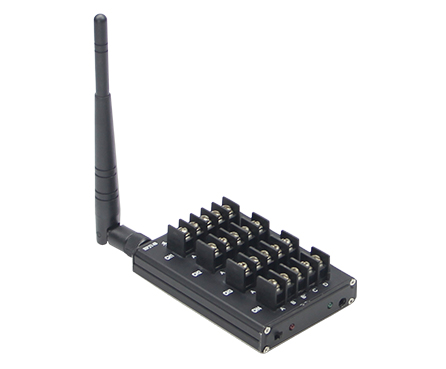
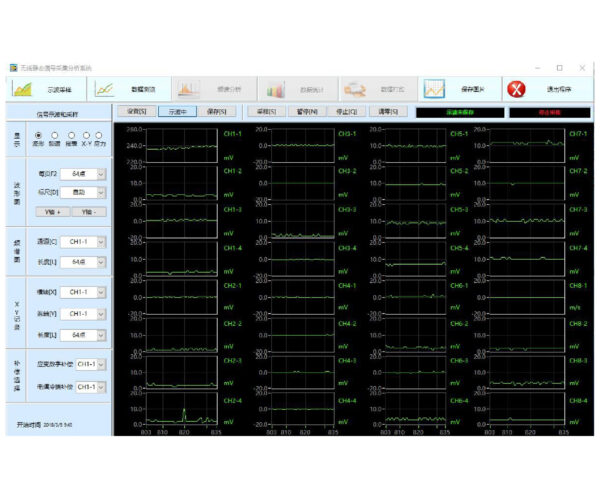
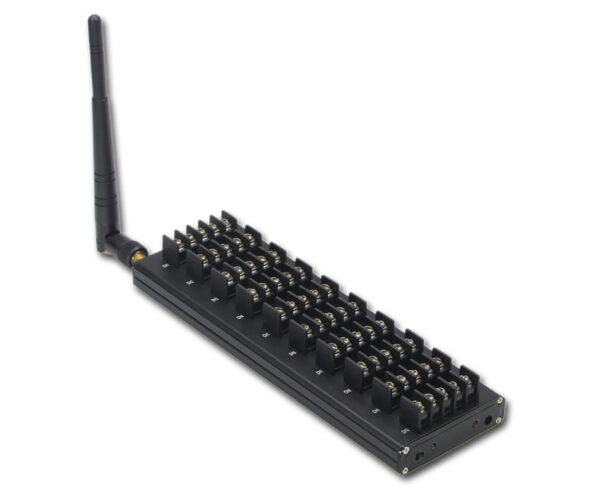
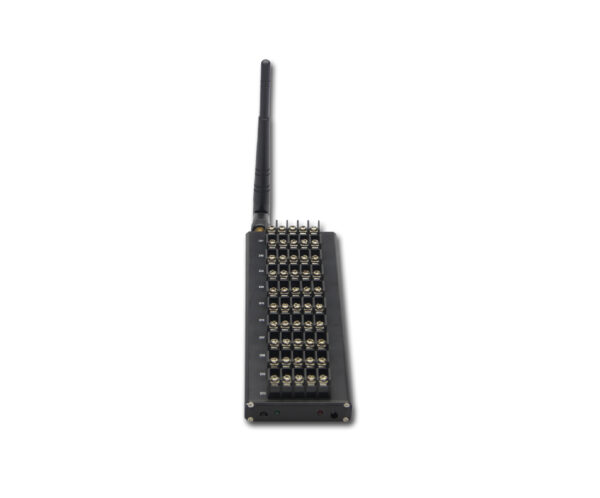
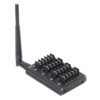
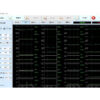
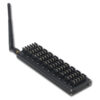
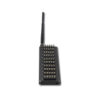
The HP-WJ4/10 Series is a wireless static strain/stress & multi-sensor data acquisition (DAQ) tester built for field and lab monitoring. Using a ZigBee self-organizing network, it reduces on-site wiring while delivering 24-bit acquisition, 0.01–10 Hz synchronous sampling, and high-accuracy measurements for strain gauges and common industrial sensors.
| True universal input (mixed input) | Connect strain, current, voltage, temperature, resistance, displacement and more—no extra auxiliary devices needed. |
|---|---|
| Wireless self-networking | ZigBee self-organizing network reduces complex wiring; supports multi-device networking and large channel expansion. |
| High-resolution 24-bit ADC | Fast acquisition with all channels up to 10 Hz, measurement accuracy up to 0.1% (strain precision noted up to ±2 με). |
| Modular & portable | Lightweight, compact modules for easy carry and fast multi-unit networking; waterproof-oriented enclosure design. |
| Built-in rechargeable power | Ultra-low power design with built-in lithium battery for 8+ hours continuous independent operation—ideal for outdoor tests. |
Product Type: Wireless static strain/stress & strain measurement instrument (10Hz class)
Series Models: HP-WJ4 / HP-WJ10 (per-node channel options)
Wireless Networking: ZigBee self-organizing mesh, designed for multi-node expansion
Core Advantage: True multi-input support—strain + electrical + temperature + displacement, etc., without extra conversion accessories
Designed For: Outdoor projects, structures, geotechnical monitoring, and fast deployment test sites
HP-WJ4/10 provides a modular wireless DAQ solution for static strain and stress testing with optional multi-sensor integration. Each node can be configured by channel for different measurement types, and all channels can sample synchronously up to 10 Hz. The system emphasizes practical field work: compact size, battery operation, waterproof housing design, and scalable networking for large channel counts.
Bridge, tunnel, and building structural health monitoring (SHM)
Static load testing (beams, columns, slabs, steel structures)
Geotechnical monitoring: earth pressure, pore water pressure, settlement/displacement
Mechanical component stress/strain validation: frames, brackets, fixtures
Field DAQ deployments where long cable runs are difficult or risky
Multi-point strain gauge test systems requiring fast setup and scalability
Full bridge
Half bridge
Quarter bridge (3-wire)
Quarter bridge (2-wire)
Quarter bridge compensation bridge
0–20 mA
4–20 mA
±100 mV
±500 mV
±1 V
±2.5 V
PT100
Thermocouples
Resistance
Displacement
Force
Pressure
Torque
Pore water pressure gauges
Earth pressure gauges (and similar field sensors)
Channels per module: 4 or 10 channels
Maximum system capacity: Up to 128 terminals / 1280 channels total
Sampling rate: 0.01 Hz to 10 Hz, software configurable (all channels synchronous sampling)
Per-channel configuration: Input type can be set independently for each channel
ADC resolution: 24-bit
Measurement accuracy: 0.1%
Strain resolution: 0.1 με
Measurement error: ≤ ±0.1%
Stability (4 hours): ±1 με/hour; ±1 με/°C
Bridge excitation voltage: 2.5 V
Supported strain gauge resistance:
60–1000 Ω (full/half bridge)
120 Ω, 350 Ω (quarter bridge)
Gauge factor (sensitivity factor): 0.01–9.99, linearly adjustable
Wireless communication distance: 200 m (typical specification)
Power: Built-in 4Ah lithium battery, 8+ hours continuous operation
Dimensions (L×W×H): 130 × 43 × 35 mm
Weight: 400 g
1) What is the difference between HP-WJ4 and HP-WJ10?
They are the same series platform with different per-node channel counts: 4 channels vs 10 channels.
2) Can I mix strain gauges and other sensors in one system?
Yes. Each channel can be configured independently, supporting strain + current + voltage + temperature + resistance + displacement and more in the same network.
3) Is the sampling synchronized across channels?
Yes. The sampling rate is software set from 0.01–10 Hz, and all channels can sample synchronously.
4) What bridge modes are supported for strain measurement?
Full bridge, half bridge, quarter bridge (2-wire/3-wire), and quarter bridge compensation bridge are supported.
5) How long can it run on battery in the field?
The built-in 4Ah rechargeable lithium battery supports 8+ hours continuous independent operation (typical spec).
6) How big can the system scale?
It scales from a small test setup to a large monitoring network—up to 128 terminals / 1280 channels.
7) What’s the wireless range?
The typical specification lists 200 m. (Range can vary with site conditions, obstacles, and antenna placement.)
8) Do I need extra converters to connect common sensors?
No. The system is designed for universal input so most common sensor types can be connected directly by selecting the channel input mode.